Featured Study
-

Lesson 9: The Limits of Artificial Intelligence
Read More »My limited knowledge of artificial intelligence is pretty much based on conversations with a computer engineer friend 30 years ago. He described his work as developing software to make a machine think like a human. I’m not sure he ever totally agreed with me, but after a while, I suggested he had reversed his task. […]
-

Lesson 8: Artificial Intelligence on Church Decline
Read More »So far, I’ve looked at global technological systems to understand the major developments in human evolution taking place around us. You could also use artificial intelligence. Again, people seem to sense its impact but have difficulty explaining exactly what that is. We are amazed when we read something written by a machine, but we are […]
-

Lesson 7: Cooperation – Collaboration
Read More »Several years ago, I attended a peace church conference. Surprisingly, I did not find a lot of emotional piety but rather profound thought, even when asked questions such as “Is there a better way to preserve the community than shunning?” However, I was most impressed with a discussion about the need to make cooperation the […]



Abortion

Lesson 1: “The Church“ and Abortion
“I decided to begin our series on abortion with an article written by Michael Cooper-White, the president emeritus of United Lutheran Seminary in Gettysburg and director of Lutheran Formation at Union Theological Seminary in New York City. He also reports for the Gettysburg Times and published this piece on July 11, 2022. It is not […]

Lesson 2: Let’s Start with Jesus
It’s pretty obvious abortion is the main issue dividing the Church in our time. The Body of Christ is split apart over a question that people acknowledge Jesus himself never addressed. This omission indicates that first-century people did not see it as a major problem. However, it also invites us to imagine how Jesus might […]

Lesson 3: A Critique of the Pro-Life Argument (Part1)
A Pro-Choice woman’s claim, “My body, my decision,” is hardly a complete ethical argument. Like many moral decisions we make in real life, it maintains that there is nothing better. In that sense, it is a rejection of the Pro-Life propositions. That means we should examine closely what those are. The most cogent presentation I […]
Luther\'s Small Catechism

Lesson 1: The First Commandment in Luther’s Small Catechism
Being that this is the 500th anniversary of Martin Luther’s posting the 95 Theses Against Indulgences, I plan to offer two series on the reformer this fall. The second will expand on a lecture I am giving at La Roche College on November 1, 2017. It suggests that the Lutheran and Roman Catholic narratives these […]

Lesson 2: The Ten Commandments in Luther’s Small Catechism
I do not intend to examine every part of the catechism. You can do that yourself here. Instead, I shall highlight some of the more important parts of Luther’s explanations, especially emphasizing some of his distinctive insights. He numbered the commandments just as he was taught in the Catholic Church. The first three included those […]

Lesson 3: The First Article of the Apostles’ Creed in Martin Luther’s Small Catechism
Luther’s explanation of the Creed’s first article is another classic. He uses everyday language to interpret creation as God’s ongoing action to provide for all our needs, protect us from all dangers, and preserve us through all changes. This is far from the deism most of our contemporaries associate with creation in which God sets […]
Theology of the Cross

Lesson 1: Luther’s Theology of the Cross
The pandemic has brought clarity to the current situation in Christianity. As it rages on, it has become apparent there are two incompatible camps not necessarily identified with denominational boundaries. One of these consistently speaks of fighting a battle against evil and clearly regards the other camp as the opposition. The anger and threats being […]

Lesson 2: Freedom in the Theology of the Cross
Freedom has become a big issue during the pandemic. Many politicians claim refusing to wear masks is your patriotic duty for it opposes authoritarian mandates. They call on their followers to choose to live as free people. Some water down their position by rationalizing that the COVID virus is not as deadly as scientists maintain, but […]
Lesson 3: Uncertainty in a Theology of the Cross
A late friend who was a world class theologian used to insist that relevance is not a theological category. He had studied under Karl Barth and believed theology begins and ends with the Word of God, not the human situation. I would argue theology is useless unless I can relate it to my everyday life. […]
Revelation

Lesson 1: An Introduction to Revelation
I decided to write a short series on Revelation after a number of onliners indicated that they were not aware that the book charted the fall of the Roman Empire. Once you begin reading it this way, it offers another perspective on the relation of church and state. Most of us think Paul’s instruction in […]

Lesson 2: The Seven Churches of Revelation (Chapters 2 and 3)
Any decent understanding of Paul’s letters begins with an appreciation that they were written to particular congregations in a specific historical period. They were preserved in scripture, because the apostle handled their problems in a manner that remains relevant for us. So, too, any meaningful interpretation of Revelation depends on discerning the situation John was […]

Lesson 3: The Heavenly Court in Revelation 4 -5
These two chapters lift the veil from heaven so we can see first hand what is happening there. When an angelic voice calls John and places him in his prophetic trance, he finds himself in a throne room at the time of Jesus’ ascension. The prophet describes incredibly magnificent cosmic phenomena and wondrously strange creatures […]
Bodily Resurrection

Lesson 1: Cremation
One of the most frequent questions asked throughout my ministry was whether cremation was acceptable. So when one of our participants suggested we look at it and other end- of- life issues, I welcomed the chance. The issue centers on our belief in the Resurrection of the Body and illustrates how theological and practical issues […]

Lesson 2: Natural Death
Another practical concern related to the resurrection of the body is what modern technology has done to our concept of natural death. Most of our customs about the end of life were based on accepting God’s will for our natural deaths. Suicide was a major sin, sometimes defined as the unforgivable sin, because it rejected […]

Lesson 3: Resurrection of the Body
Each Sunday many of us profess we believe in the resurrection of the body. We assert Jesus was resurrected in body as well as spirit. He ate with his friends, allowed them to touch him, and showed them the marks of his crucifixion. The resurrected Christ was the same person who loved them during their […]
Sacraments

Lesson 1: Sacraments as a Means of Grace
Talking to Derek last week, I was reminded that I wanted to push myself to look at the commandments and sacraments from a modern perspective. All of us are conditioned to use old concepts when speaking of ancient traditions. They roll off our tongues without much thought. There is certainly no great harm, except when […]

Lesson 2: Sacrament as God’s Bodily Presence
The sacraments remind us that Christians claim that God is more than spirit. Although most of us can remember having defined God as a spirit at various times, the Church has insisted God is a person. And we all know a person is body as well as spirit. I can appreciate what our theologians are […]

Lesson 3: The Meaning of Baptism
Early Christians felt baptism was so important they built their houses of worship near running water whenever possible. Those who have visited ancient churches in their travels have seen many were constructed right over springs so that baptisms could be performed with living water. The importance of the sacrament is also reflected in the New […]
What is Truth?

Lesson 1: Trust
The present concern with fake news and a post-truth culture goes deeper than we usually acknowledge. I pulled out some quotes from Sissela Bok’s 1978 book, Lying, that I used when writing about trust decades ago. She wrote that “trust in some degree of veracity functions as a foundation of relations among human beings: when […]

Lesson 2: Truth and Facts
At first, I was taken aback when people read last week’s lesson as a political statement. My intention was simply to point out that a healthy society depends on being able to trust that people are telling the truth. The political examples were meant to show ours is ailing. This week, I wanted to suggest […]

Lesson 3: Truth and Political Correctness
A few weeks ago, Father Jude reminded us that the given in a democracy is a reasonable, educated audience. “Absent that as the valid context, free speech in a democracy is just so much noise, at best, and, at worst, a detriment.” Knowing Jude, I am sure he did not mean that all reasonable and […]
Ten Commandments

Introduction to the Ten Commandments
All Christians, all Jews, and even all Muslims agree the Ten Commandments are a basic statement of how to live according to God’s will. The disagreements come with how to codify these into specific laws. For instance, in our time you could argue all religious people are pro-life even though they do not agree on […]

Lesson 1: The First Commandment
I am the Lord your God, who brought you out of the land of Egypt, out of the house of slavery; you shall have no other gods before me. The command goes on to prohibit making graven images, a command that might appear to be simpler than it really is. It certainly does ban worshiping […]

Lesson 2: The Second Commandment
You shall not make wrongful use of the name of the Lord your God, for the Lord will not acquit anyone who misuses his name. The ancient Israelites took this so seriously that they did not even utter God’s name in fear that they might use it incorrectly. They would insert “Lord” instead of the […]
The Pandemic

Lesson 1: The Situation
I really ended the series on world religions because I was getting all sorts of emails that implied it was a good subject, but somewhat irrelevant in the midst of the pandemic. Along with this, I kept feeling a need to recognize what is going on in Christianity during this crisis. In general, the situation […]

Lesson 2: What We Have Learned
In a time when the Christian voice in the public conversation is babel and even cacophony, those struggling to follow Jesus must strive to be radically realistic. Jacques Ellul often describes this as being decisively honest. That would involve acknowledging the lessons that the pandemic has taught us and then making appropriate changes in our […]
Lesson 3: Trust… In Government
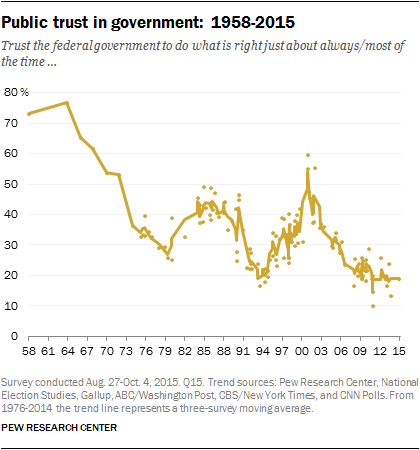
The pandemic has brought into focus all sorts of societal problems. The last lesson discussed only the large number associated with Smithfield Foods. Most of these have been festering for decades. The question is whether the pandemic will bring them to a head in a way that incites creative response. The Evangelical Lutheran Church in […]
Friendship

Lesson 10: Early Christian Meals
In the last lesson, I suggested conversing over fine food and drink might be the best way to promote friendship in our day. In this one, I’d like to support the thought by showing how important this is for Christianity. Meals played a major role in the Old Testament. There was Abraham and Sarah offering […]

Lesson 1: Changes in Friendship
When I was growing up in Sunbury, Pennsylvania, people spoke of “family and friends.” I had all sorts of “family” throughout the small city. When we would gather for annual reunions, we would be joined by some of the few who had moved away to seek their fortunes. I could also point to many “friends” […]

Lesson 2: Professional Friends
Last summer, I participated in a conversation that illustrates the current situation of friendship. A man sat down beside me and revealed he worked at the Flamingo Casino in Las Vegas. When I asked what he did, he hesitated. “It is hard to explain,” he responded. “Many people can not understand. I am a friend.” […]
 Frontline Study is an online discussion of the scriptures, inviting you to share your comments and your reflections on each weekly topic. Simply click on the "Add Reply" text at the top of each post to see what others have posted and to add your thoughts.
Recent Comments