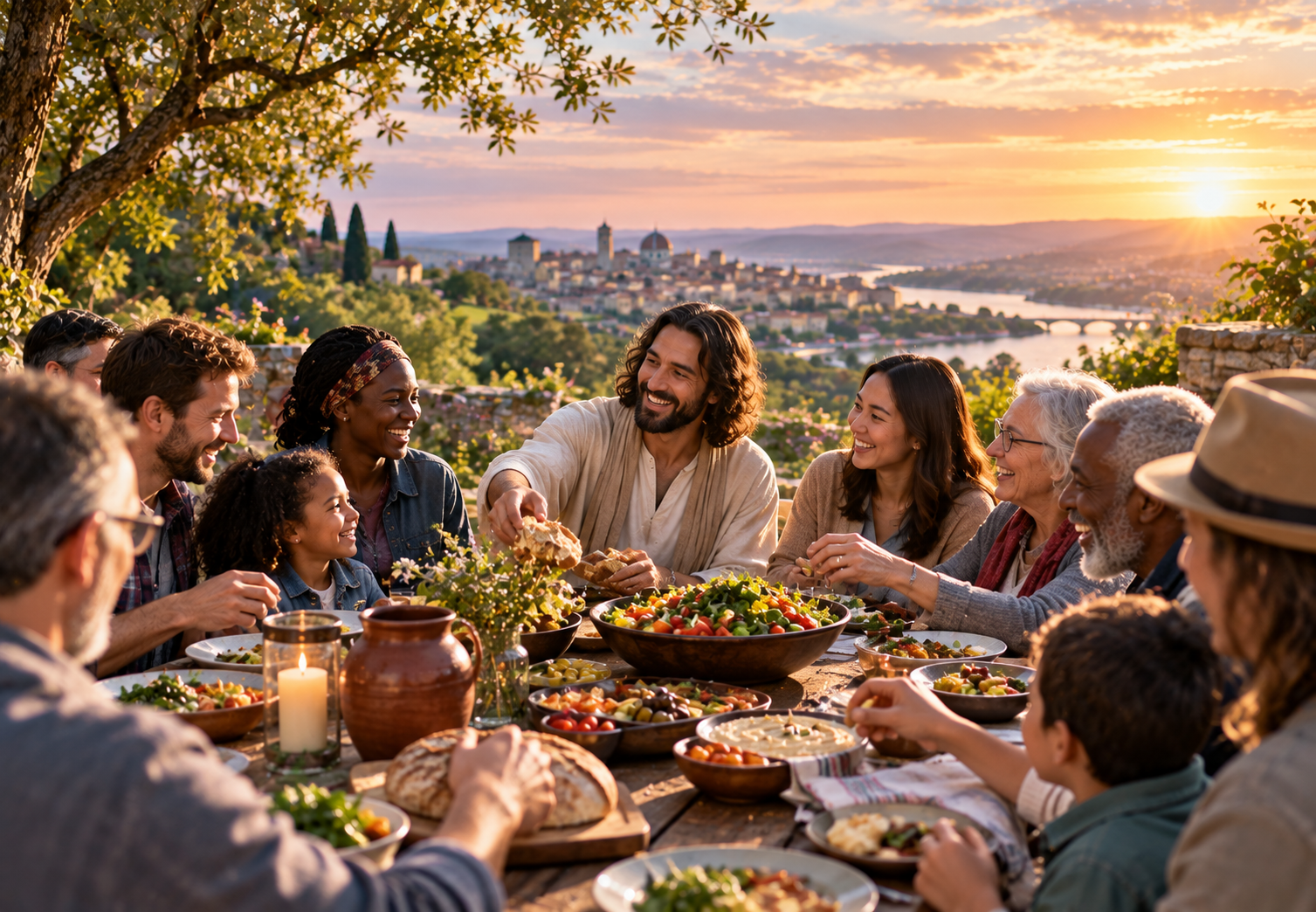

Some people are having difficulty with my description of salvation as “now and not yet.” Myron says the problem is being conditioned to think of resurrection and salvation as almost synonymous and happening after our deaths.
The New Testament agrees the two speak of the same thing, but regards them as more than simply being restored to life after we die. They involve being raised to a new kind of life where God’s will is done. Because Jesus has already been resurrected into this, the Testament claims he is able to share some part with us now. For instance, Paul describes our dying and being raised to this new life when we are baptized. (Romans 6: 3, 4) He speaks of Christ living in us so we pass over the barriers that normally separate people from God and each other (Galatians 2: 20, 21 and 3: 27-28). John says much the same when he speaks of the Father and Son dwelling in us (John 14: 19-21), and the first three gospels when they claim the Kingdom of God is already among us (Luke 17: 20, 21).
None of these see this as a perfected salvation. The reality of suffering makes this obvious. In fact, Myron wonders if this is so far from perfection that we do well not to use the name “salvation” for it at all. He doesn’t mind speaking of a “foretaste of the feast to come”, but questions if going much further makes sense.
This leads to Anne and Bob’s questions about what this poses for our Christian lives: How are our lives any different than other moral lives? Are they really better? What might be their unique characteristics? Is the promise of life after death the only difference?
For starters, we can make the simple observation that Christian lives do add the dimension of the divine. Salvation is to be in a righteous relationship with God as well as other people. In fact, John defines eternal life as simply to know the true God and Jesus (John 17: 3).
This might not produce better works so much as offer other benefits, such as: 1) The assurance that what we are doing will bear fruit, even when that does seem possible, 2) The conviction that God’s Spirit shares our lives and makes up for our deficits (Romans 8: 12-39), 3) An attitude of gratitude that leads to a realistic appreciation of life as gift, 4) Motivation for helping others even at a cost, (Romans 8: 18-25, 5: 1-5, 15: 1-3, 8: 17).
Christians are trying to say something like this when they describe the Christian life as faith, hope, and love. The idea is we can love now, because we have faith in God’s promises and hope in his completing the salvation that has begun.
Anne is certainly right that this involves a challenge, because it means we should be participating actively in the Kingdom now. If the first Church shared their possessions and refused to participate in war or any other bloodshed, we should be co-operating rather than competing with other people and working for the good of the community rather than only pursuing our own happiness.
What are other distinctions between the Christian life and the other good lives around us? Are they enough to describe the Christian life as some form of salvation now?