Throughout the years, being spiritual has usually referred to experiencing God’s presence in one’s life. When the early church spoke of Jesus’ Spirit living on after His death, they meant more than merely recalling past experiences and reports, more than simply adhering to what He taught during His ministry. They insisted that after the resurrection, the risen Christ was present among them, still guiding in ever-new directions.
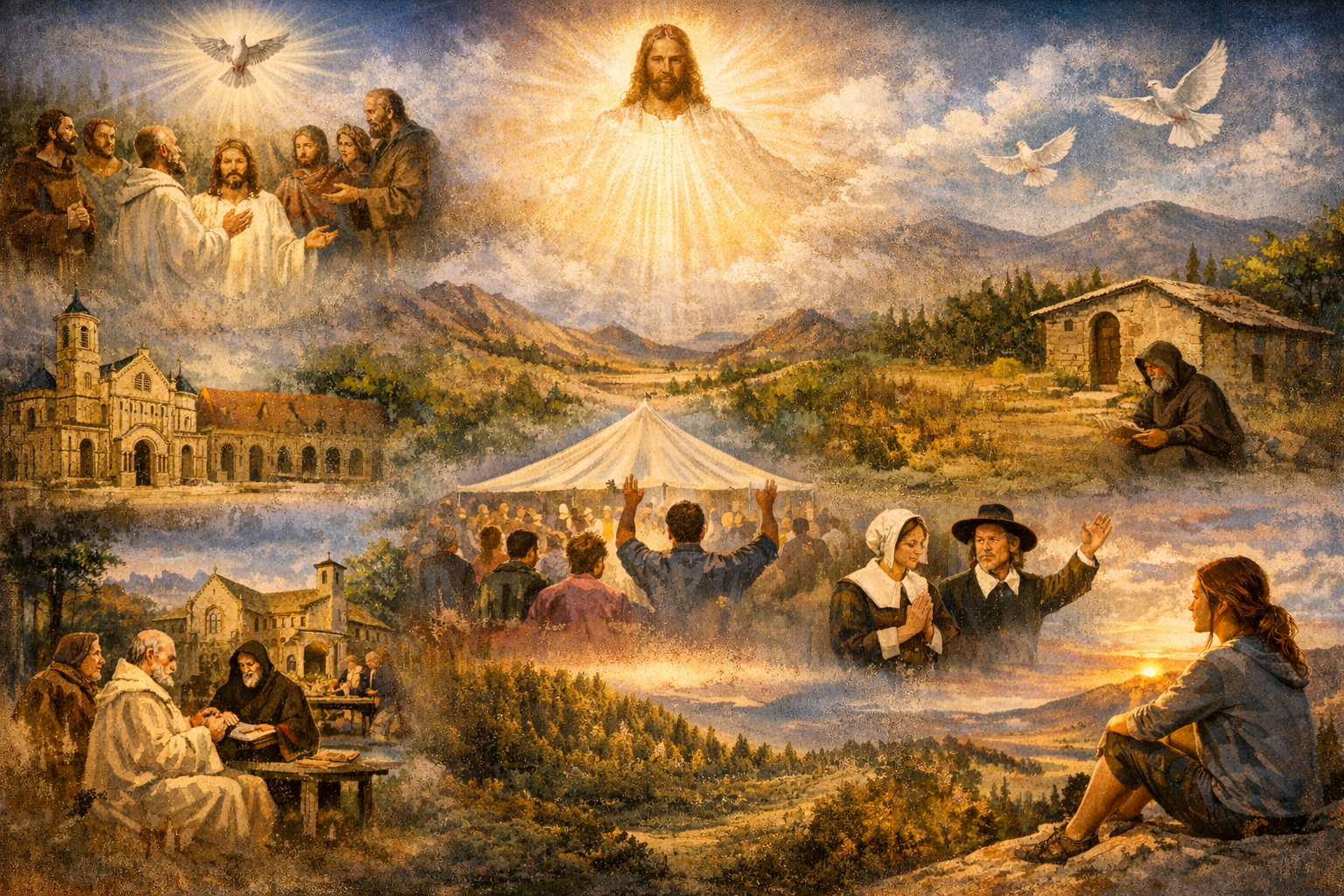
The situation changed when the Church became an establishment of the empire during the 4th century. Many identified themselves as Christian by accepting particular doctrines and practicing certain rituals. In reaction, some individuals moved to the desert where they practiced a life of contemplation they regarded as a purer form of the faith. These solitary monks were known as the Spiritual, who constantly lived in God’s presence.
Before long, monastic communities developed that organized their lives around prayer, study, work, and eating together. During the Middle Ages, there were vast networks of these very large alternative societies. To this day, they are called the Spiritual or Religious in Roman Catholicism. People living in ordinary society are served by secular priests.
In the later Middle Ages, “spiritual” was extended to Christians living outside the monasteries who practiced a deeper form of religious life. These lay groups employed spiritual exercises that included self-examination, prayer, and contemplation to maintain a close connection with the divine in their daily lives.
The same differentiation developed after the Reformation. The earliest Protestant churches formed around confessions they regarded as orthodox doctrine. In reaction to these state churches, other denominations developed that called for a more personal relationship with God. Not wanting to seem catholic, these were first called pietist rather than spiritual communities.
Nonetheless, you see the same characteristics associated with spiritual. In the past. Methodists talk about living a spirit-filled life of personal piety and social action. Puritans profess a pure, holy lifestyle. Quakers speak of being moved directly by the spirit of God. Pentecostals claim to speak directly with the divine. Mennonite and Amish live apart from society in communities rigidly ordered on their perception of Christian principles.
Spiritual movements have also sprung up apart from the denominations. Revivals, aimed at the non-churched and those with lukewarm faith, call for personal commitment. Spiritual retreats engage in exercises that foster more personal relationships with Christ.
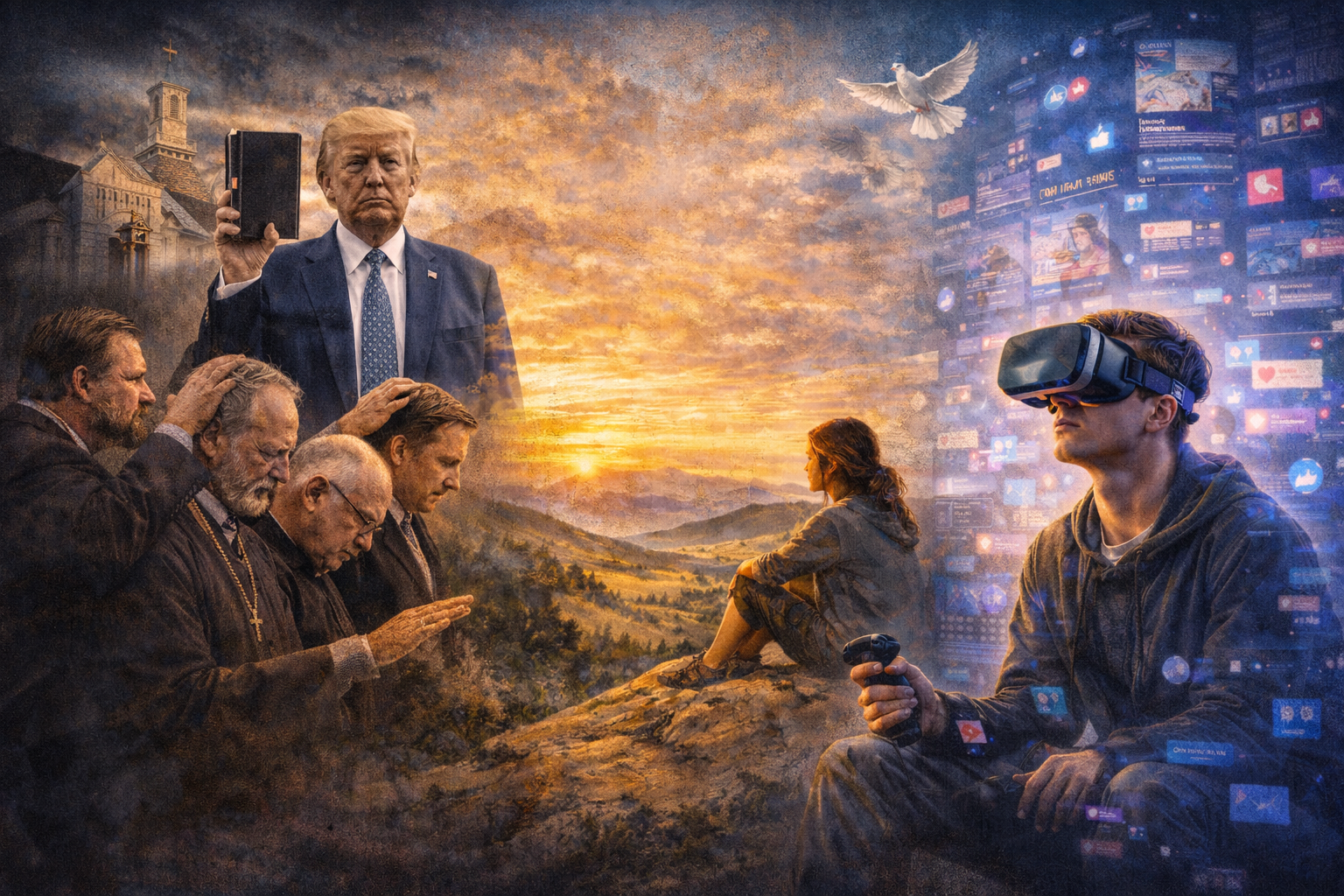
If there is any consistent characteristic of “spiritual” found in Christian history, it is experiencing the presence of Christ beyond simple acceptance of doctrine and perfunctory attendance at ritual. The innovation in our time are the large number claiming no affiliation with an established religious community while insisting they are spiritual.
Several questions arise that include “What does spiritual mean?”, “ Is there a shared understanding?”, “Can it be practiced in a healthy way by isolated individuals?”, “Has Christianity so permeated Western Civilization that spirituality fosters Christian values?”, “Can this form of spirituality be passed on to future generations?”