
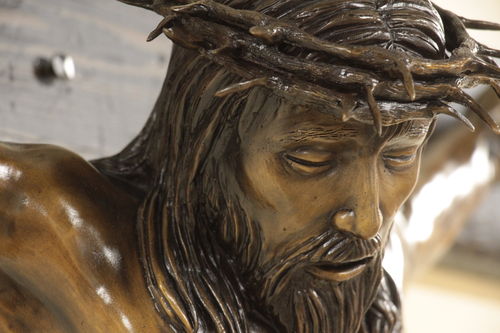
Two flawed pictures of the crucifixion are blunting the church’s message in our time. The first presents Jesus as a sacrifice enabling humanity to escape a fallen creation. Anyone who is willing to believe this and accept the deal escapes the last judgment and is taken to live with God in Heaven as the evil creation is destroyed with fire.
History in this picture is merely the setting for the conversion of individuals. Prophecy is irrelevant, because current events are really insignificant. In fact, the most extreme reading of this regards my own actions as meaningless, because Jesus’ sacrifice excuses anything I do.
Prophetic preaching and teaching are also irrelevant in the other flawed picture. The power of positive thinking school thinks the church should stop proclaiming the crucifixion, because it contributes to negative thinking. Robert Schuller actually removed crosses from his Crystal Cathedral. He and Joel Osteen reduce the gospel to loving yourself which amounts to having confidence in yourself. Prophecy has no role to play in this self-help program promoting self-esteem.
In contrast, the Bible presents Jesus as a prophet whose words and actions call for the transformation of the creation. His crucifixion is an attempt by the status quo to silence a prophet that fails when God raises him on Easter. An essential part of that resurrection involves Jesus’ followers continuing his prophetic ministry.
From this perspective, the crucifixion is an affirmation of the creation in spite of humanity’s awful actions. Paul and John maintain it is an act of God’s love indicating his intention to save the world he created.
A theology of the cross draws attention to the dark side of creation in order to redeem it, not to damn it. It calls for the repentance of humanity when it speaks truth to power. The goal is always inspiring people to work with God in fulfilling the creation’s potential. The prophet points to the creative change needed to live according to God’s will.
It is obvious prophetic teaching and preaching has to be done with care. Jesus warns that it can be self-righteousness judgment and advises us to begin with self-criticism. We have to remove the log in our own eye before we attempt to remove the splinter from someone else’s.
Although many worry it might divide congregations, it seems a risk we must take if we are to restore the relevance if God’s Word in our time. For sure, some of that division can be avoided if we keep mind our goal is to change hearts in preparation for God’s beloved community.