A late friend who was a world class theologian used to insist that relevance is not a theological category. He had studied under Karl Barth and believed theology begins and ends with the Word of God, not the human situation.
I would argue theology is useless unless I can relate it to my everyday life. Realism might not be a theological category, but it is a demand made of all creative thought.
This led to all sorts of discussion about what realism is. Generally, he believed his interpretation of the Bible defined it and could answer any question I advanced. I felt we were dealing with a lot more uncertainty, often bringing up Douglas John Hall, a respected Canadian theologian. Hall tries to write a theology relevant to North America and feels that is best done with a theology of the Cross.
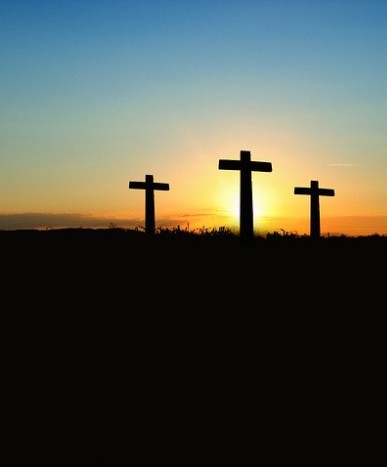
He thinks most of the Christianity we see in North America preaches that God rewards good people. You can tell whom God favors, because they are successful. People can get away with this corruption of the Gospel by focusing only on the glory of the Resurrection. As soon as they turn to the crucifixion, they are brought back to the uncertainty of reality with a jolt. If Jesus was executed as a criminal, he can hardly be regarded as a success by worldly standards.
Hall thinks a theology of the cross embraces this uncertainty. He likes to illustrate this by pondering what the theological values are not. He observes we are talking about faith not certainty, hope not culmination, and love not power.
That kind of uncertainty makes most of us very uncomfortable. Like my theologian friend, we want to have the correct answers to every one of our questions, whether social, political or religious. And that has led to a lot of problems recently. Rather than acknowledging the ever-changing circumstances of our historical existence, many accuse those who report contemporary events of being fake news. Rather than adjusting to new findings about the COVID- 19 virus, many insist on activities that endanger lives. Rather than being honest about the Bible offering a number of traditions and perspectives, many claim there is only one way to read the scriptures, and those who refuse to accept this are not real Christians.
A theology of the Cross begins by honestly confronting the reality of human life. We live constantly in uncertainty. The Risen Christ who still bears the marks of his crucifixion guides us not by providing absolute answers to every question but rather by accompanying us as we make our way. Christian faith is trusting a person, hope is accepting promises about the future, and love is putting our well-being in the hands of another person. We are always dealing with the unknown as we follow Christ who is building a peaceable kingdom, a just society, and a beloved community beyond our wildest dreams.