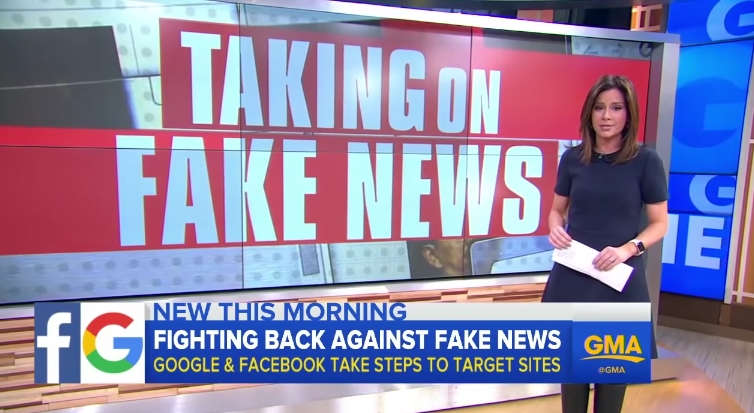

Looking back over this series, I realize how much I was compelled to continue, because the news every last morning provided a new set of lies spewed out by public officials to whom we had given our trust. That compulsion also was fired by the large number of people who repeatedly told me this disregard for truth caused them to worry deeply about the future of humanity. It is no wonder that the editors of the Oxford English Dictionary picked post-truth as the 2016 word of the year. They defined it as “relating to or denoting circumstances in which objective facts are less influential in shaping public opinion than appeals to emotion and personal belief.”
If objective fact is no longer an ultimate standard, a post-truth world is a virtual reality. Using virtual reality in this fashion includes but goes beyond the images created by a computer. It also includes but goes beyond the artificial environment constructed by modern technology. Such a world is one of our own creation, a fantasy with all sorts of cultural and religious ramifications.
Culturally, a post-truth world is associated with the deterioration of language that we see all around us. Conversation is the basis of the interaction between people in a society and therefore is essential in its search for truth. Fundamental in this search is the trust that others are using words honestly in the same way that we are. People have always become angry and frustrated when they felt their trust was betrayed. In My Fair Lady, Eliza Doolittle sang, “Words! Words! Words! I’m so sick of words!” when the words spoken around her did not correspond to the actions of those speaking them. So, too, we have always trusted that words established a common sense and shared understanding. If that trust breaks down, chaos and anxiety descend upon us. When Polonius asked Hamlet what he was reading, he responded with the same, “Words, words, words,” complaining that the written word that used to provide meaning in his world was now useless. All appeared madness after his discovery that his uncle had murdered his father and married his mother.
In our present post-truth world, we are led and surrounded by egomaniacs who Tweet rather than converse. Few can even put together a coherent sentence in their outpourings of words to express what they believe and want. Families report their best conversations are in cars in which they do not have to look into each other’s eyes rather than around a dinner table where intimate sharing takes place. Conversation has been reduced to self-assertion.
Religiously, a virtual reality is a denial of the order that defines God’s creation. Religion also depends on words, language, and conversation. It is no accident that the scriptures from beginning to end picture our relationship with God as a conversation in which we engage with God’s Word. And again, it is no accident that the primary sacrament takes place around a table. Martin Luther defined sin as being turned in on self. It is to live completely in a world of your own creation, not interacting in a significant way with other people or with God. In many ways, sin can be described as living in a virtual reality.
Often the post-truth world is characterized by gridlock, which prevents anything creative from being accomplished. We commonly lament that this points to our inability to compromise and define that as recognizing you have to give up something in order to achieve at least part of what you want. Sadly, that focuses on a secondary and negative feature of the word. The primary and positive definition of compromise has to do with sharing in order to attain a common good. It has far more to do with that which is mutually beneficial than with that which I have to give up.
Gridlock is a stalemate commonly associated with traffic jams in which cars beep loudly to voice displeasure but contribute nothing to the solution of the problem. The solution in the real world depends on those at the front of the line conversing in one way or another, making promises with one another, such as “You go first, I’ll wait” and “Okay, I trust that you will not hit me. Thanks.” Of course, that is too simple, but it certainly characterizes the need for trust and conversation in this post-truth world. And it helps understand that the primary Christian virtue is love that inherently includes forgiveness and self-denial.