
When I ask people why they come to church, the answer I almost always receive is “community.” If I continue with, “What about right doctrine?” I usually get laughter.
That does not mean that people do not appreciate good theology; just that their highest priority is to be around people who practice the Christian life with integrity. That is why pedophilia among pastors, embezzlement by leadership, and unfaithfulness by laity is so much more damaging than poor theology. Christianity is primarily based on believers reporting the gospel while demonstrating how it has changed their lives.
This has defined the church since the beginning, even though “community” has changed in modern times. The local traditional family has pretty much disappeared with people moving around far from their roots. Sociologists report we have fewer but far more intense personal relationships now days. For instance, marriage has become two people depending on one another for emotional support. Extended family, neighborhood relationships, and community traditions play little or no part.
In the past, we often spoke of the church as “a family of families.” Today, more and more people choose not to have children. Often a couple is raising offspring from a previous marriage. Single mothers or fathers have responsibility for most of the family responsibilities. Or, for that matter, many worshipers are living together without being married.
People in these situations often complain they feel excluded with talk about “a family of families.” For that reason, I suspect the future church will define herself as “a community of friends” who support one another in their efforts to live a Christian lifestyle. People living in all sorts of different personal relationships will gather.
In many ways, this picture of Christian friendship is more accurate than family. Christian community has been based on choice rather than biology. Believers often spoke of themselves as adopted children of God, joining the Jews as God’s people.
Of course, the concept of friendship has changed as well. Today we find ourselves surrounded by professional friends. Advertising has made what used to be an oxymoron a common place. We are told we “have a friend” at the car dealership, the lawyers’ office, the insurance agency, and the stock brokerage. Most of us naturally regard our doctors, counselors, and therapists as our friends, even though we are expected to pay them for their time. That is far from Jesus’ definition of friend as one willing to give her or his life for another person.
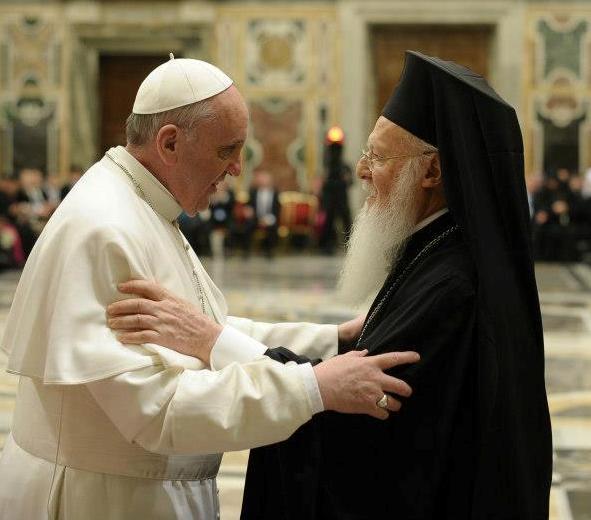
We are already seeing a move from right Christian doctrine to authentic Christian lifestyle. Certainly much of Pope Francis’ popularity is based on this. I expect we shall see much more in the future Church.