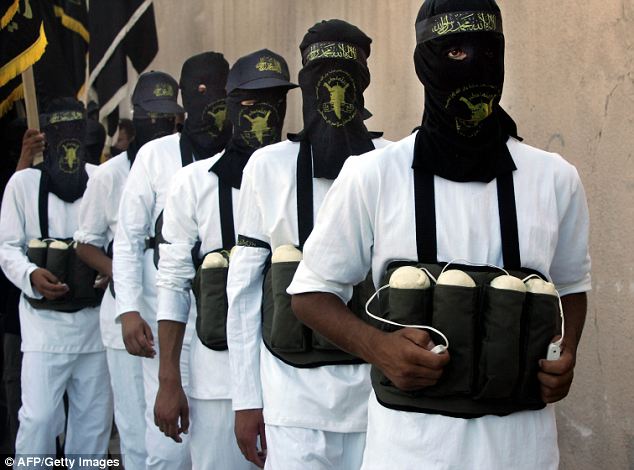
As just about every US citizen is discussing the mass murders, I find it helpful to see them as a new form of terrorism found in our technological society. Placing the killings in this context gives me a realistic perspective for engaging in the gun control, mental illness, and Christian teaching debates swirling around us. Terrorists have used violent acts to get what they or their group wants throughout history. Not possessing political, economic, or social power, they create fear and disorder to disrupt society in hopes of provoking rebellion. In Jesus’ time, Jewish zealots used terror in hopes of overthrowing the Roman Empire.
Gun control becomes critical because modern technology gives incredible power to individuals and small groups. The sicarii who were the most violent of the first century Jewish zealots used short daggers. In our time, one person with an automatic weapon can kill incredible numbers in minutes. Gun control then becomes an important part of the national defense and police programs.
Mental illness becomes a factor because modern terrorists endanger the vulnerable. This is apparent with suicide bombers who are inferiors manipulated by their leaders. Social media offer far more devious control in our US society when mass shooters might not even be personally known by other members of hate groups. The leaders only have to post their message online. The mentally disturbed feel they are martyrs for the cause by embarking on their own self-styled suicide missions. In this context, the perpetrators are not so much demonic as portrayed by many politicians but rather victims of hate groups that threaten our society. Controlling these groups is just as important as providing care for the mentally ill.
This perspective also opens up some traditional Christian teachings. The discussion with Pilate in John 18 makes clear the governor regards Jesus as a zealot. In his denial, Jesus claims to be a speaker of truth— not a political player. I can imagine Him saying, “Men of old said killing a few leads to saving a multitude, but I say to you loving everyone leads to saving all.” Jesus teachings paint terroristic acts as expressions of genocide.
In the all-pervasive global economic system I have been examining in these lessons, modern terrorists make the killed (and even the killers) commodities that can be managed and used as desired. They are objects that can be sacrificed to get what one wants. One person is interchangeable with every other.
Jesus’ teachings fly in the face of this kind of thinking. He proclaims the sacredness of every person. To commodify a neighbor and even self as objects to be managed, manipulated, and exploited denies the mystery of God’s unconditional and unlimited love for each one of us. To treat personal relationships like business transactions, to replace covenants with contracts, or to define citizens as consumers might well deny God altogether.
We all know it has become tremendously difficult to address terrorism in the present global economic system, because it means some powerful groups have to sacrifice profits. I suggest Jesus’ teachings reveal this system also provides a congenial environment for terrorism. The commodification of everything leads to the commodification of every person.