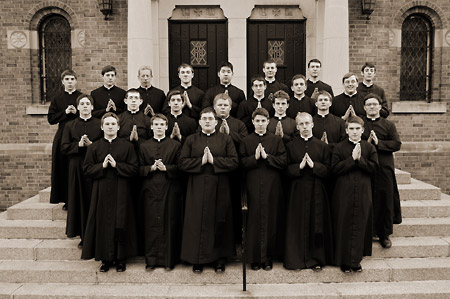
Who speaks for the church in society? If you are a Roman Catholic, you might point to the leadership, if a Lutheran the scriptures, and if a Quaker the community. Even Pope Benedict, a pretty conservative Roman Catholic, acknowledges different voices speak for God in different historical periods. He thinks it is the hierarchy’s responsibility, but others have had to step in during times when they fail. I am among those who think all three voices are always important, even though different situations might call for one or the other to be louder.
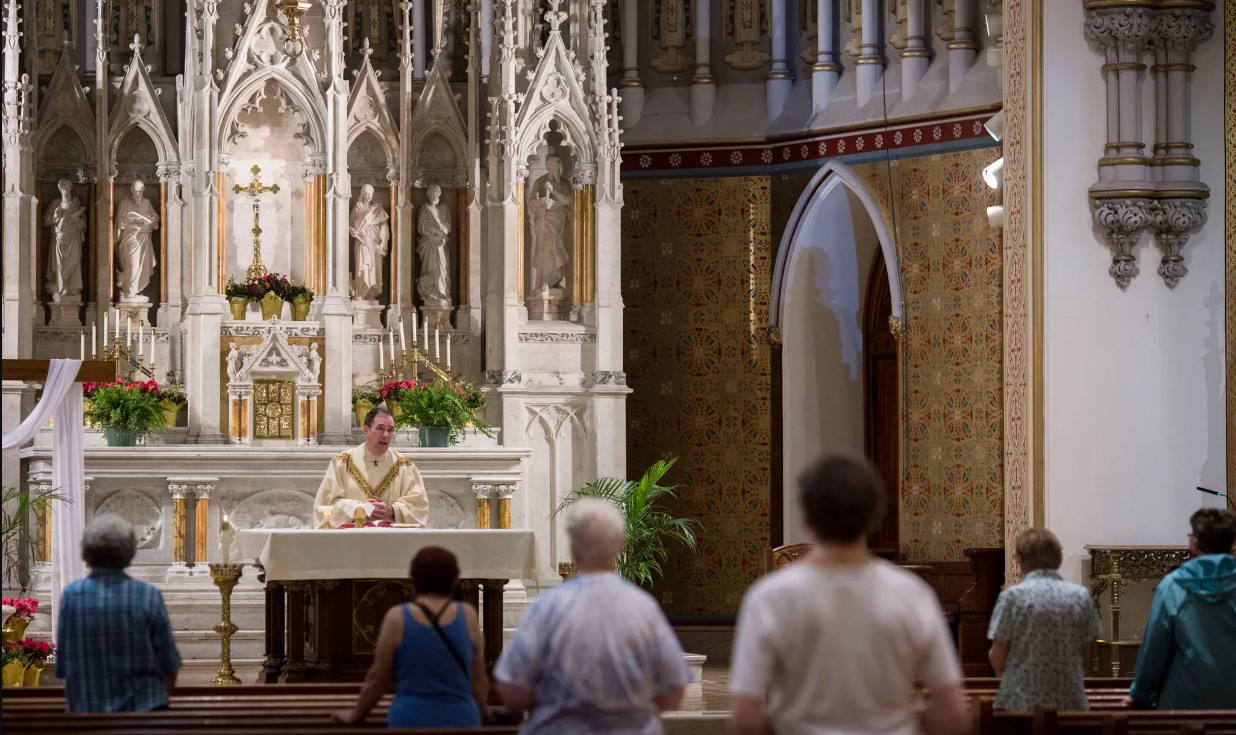
Roman Catholics certainly believe ordination sets apart the clergy to operate as God’s representatives in a special way, exemplified by the Pope speaking ex cathedra. However, Lutherans in our colonial period thought it terribly important to find pastors who would immigrate to the U.S. and provide solid foundations for our churches.
In fact, the need for moral, learned clergy goes back to the first century. Timothy’s New Testament letter wrote, “Whoever aspires to the office of bishop desires a noble task. Now a bishop must be above reproach, married only once, temperate, sensible, respectable, hospitable, an apt teacher, not a drunkard, not violent but gentle, not quarrelsome, and not a lover of money. He must manage his own household well, keeping his children submissive and respectful in every way— for if someone does not know how to manage his own household, how can he take care of God’s church? He must not be a recent convert, or he may be puffed up with conceit and fall into the condemnation of the devil. Moreover, he must be well thought of by outsiders, so that he may not fall into disgrace and the snare of the devil.”
It is clear the pastor or bishop was to be respected; so he, and in those days it was a “he”‘ could represent the community in the society. In a time when nobles ruled society, it was important to have our own authorities to speak with them. Even in our own democratic society, we give a lot of power to governmental and corporate leaders, sometimes too much. There is still a need to have official church spokespeople.
Scholars believe the Church, also, sought this kind of leadership to provide checks on charismatic believers who claimed God was speaking through them. The idea was not to deny God might speak through the prophet’s lone voice, but to cope with those who were false prophets. The bishop was to be someone the community trusted to test these with the accredited tradition that went back to the apostles. That meant they should know the sacred scriptures and the oral heritage. Even a quick reading of Timothy’s requirements reveals it, also, meant that they listened to what the people were saying and experiencing.
Probably most of us would say the Church is experiencing a crisis in this kind of leadership now. First, a number of our leaders have embarrassed us by their unlawful actions. Sometimes this has involved trying to preserve the power of the institution rather than serving the needs of God’s People.
Second, there is a shortage of clergy. Seminary enrollment is way down. Those who graduate find themselves deeply in debt and entering a low-paying profession. At the same time, the Church has backed off supporting seminaries and candidates as they once did, seemingly an act of suicide.
I have lived by a seminary most of my life. A lot of people there are working to rectify this situation. They think it is going to take a lot of creative thought and sacrificial action. We have to be ready to help them.