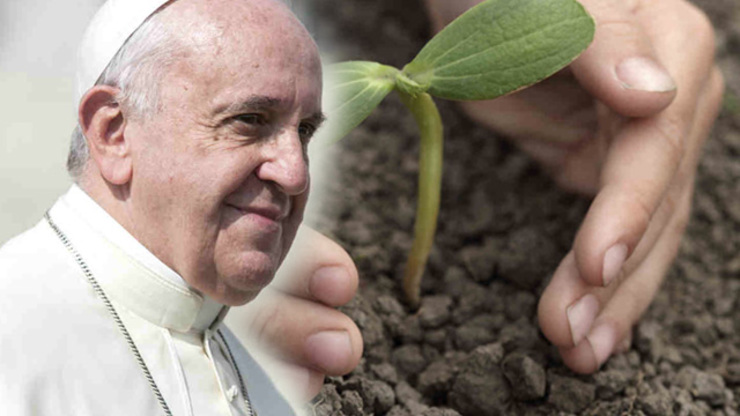
I think Pope Francis’ encyclical on the environment introduces a new stage in the ongoing conversation between Church and Society. First, he calls on all groups to enter into dialogue about clean energy. He does not present the Church as God’s spokesman delivering absolute laws. Second, he maintains ethics are an integral part of the dialogue, challenging the self-serving and perhaps self-destructive direction of present policies.
Following his lead would go a good way to addressing the concerns expressed by some of our readers when I announced I wanted to discuss current events. Let me recount some history that provides background.
When I entered the ministry in the 1960s, the church was speaking on social issues, such as Civil Rights and the VietNam War. There was by no means a consensus on God’s Word in these matters, but there was a robust, creative dialogue. Synods and national church assemblies featured heated debates and votes on where the Church stood.
This was followed by a period when the church was silenced. Evangelicals claimed the Church should stay out of politics and stick to saving souls. Roman Catholics like President Kennedy declared their Church in no way influenced their politics. People defined religion as a private matter. Synods and national church assemblies were consumed with budget and internal committee reports. There was an understanding that the clergy were experts who should tell the laity what to do, but only in religious matters.
Somewhere along here the Church began speaking about sexuality, beginning with abortion and culminating in same-sex marriage, seeing these falling into their domain. The laity pretty much ignored these as totally irrelevant for their everyday lives. The laity also ignored some great statements on poverty, feeling justified in doing so, because after all religion had become a private matter.
Tensions arose, as these became hot political issues. As certain groups felt called to champion their positions, opponents began to speak up. Soon synod and national church assemblies were once again engaged in heated discussions. However, in some ways these were more bitter and threatening than those in the 60s. Both sides claimed to speak for God, and some threatened to leave if they did not get their way.
Then in 2009, a number of leading Roman Catholic, Evangelical, and Eastern Orthodox leaders issued the Manhattan Declaration that promised “resistance to the point of civil disobedience against any legislation that might implicate their churches or charities in abortion, embryo-destructive research or same-sex marriage.” This seemingly incredible alliance was pretty much ignored by the public. However, in the following years, these groups began speaking more and more of engaging in a “battle” or “war” society was waging against God and Church. They reacted to legislation as attacks on religious liberty that would lead to persecution of religion.
It is in this context that Pope Francis has been speaking, calling for listening as well as speaking, dialogue rather than pontificating. His encyclical is only one example of how the Church is again finding her voice in ministering to society. We heard the people of Mother Emanuel Church speak to hatred with, “We forgive you” so powerfully that the community did not riot but took down battle symbols. We heard many Church members welcome the Supreme Court’s recognition of same-sex marriage and acceptance of Obamacare in creative ways that promised unity.
Let’s pray that this will lead to a more constructive conversation between Church and society. Next week I’ll address how this might overcome some past abuses that ignored the need for the Church to be relevant to humanity’s current situation.