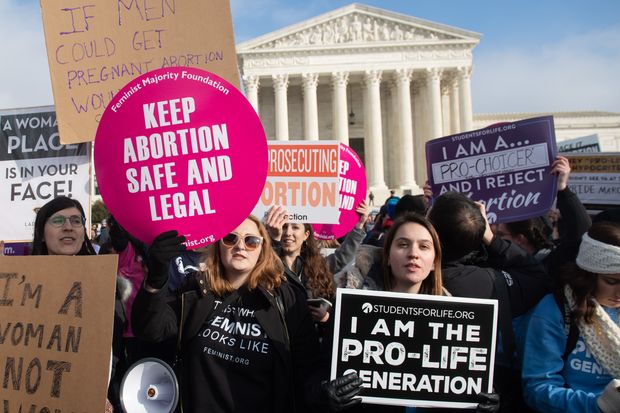
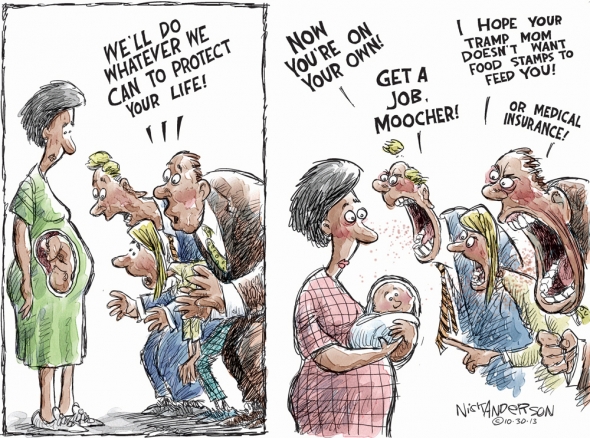
A start to resolving the conflict would be an agreement to converse with one another using creative healing words and to do so as a family that is committed to working things out. The conversation would not be an abstract discussion of natural laws or eternal truths, but an attempt to improve a disturbing situation that causes human suffering.
Just as the members of a family share problems and acknowledges their own part in them, so the conversation would begin with an implicit confession of our participation in society’s sin. We all share some responsibility for the role sex plays in our male-dominated society, not only in rape but also for all sorts of practices that force women to make decisions about abortion.
The conversation would extend compassionate love to all those involved, the fetus and the woman who carries it, as well as every other living person involved. It would recognize that a fetus is a living person who cannot speak for self, but it would also take into consideration that many other living persons suffer without a voice in our society. And that would apply to the woman who carries the fetus if some had their way.
The goal would always be to heal, not aggravate the situation. It would be assumed that you do not sacrifice the attainable good for unattainable perfection. The present society is not the Kingdom of God, but Christianity’s visions of the future still inspire our actions.
The discussion would ask where we can draw reasonable and compassionate lines. That has always been recognized in the “Do not kill” commandment. We consider circumstances such as accidents, self-defense, warfare, intention, maliciousness, extent, etc. With abortion, this involves questions like where personal freedom ends and when it is not appropriate to intervene in the development of life.
Everyone has always drawn the line at least somewhere between taking the life of an animal and a dying person in pain. Often in the abortion discussion, this is presented as determining where life begins between conception and birth. Jesus, in the Sermon on the Mount, might take the line all the way back to the intention in the minds of those choosing to have sex. Today the issue has grown much more complex as technology has blurred, if not decimated, what once were natural beginnings and endings.
But perhaps most important, the conversation should take place as if the pregnant woman and her loved ones were present. That in no way is a rejection of debate seeking to establish ethical principles. It is simply a recognition that compassionate love is called for in this situation. And I at least find it in the nature of Jesus healing the person before him who suffered regardless of the religious law as read by the scribes and Pharisees. Christians have to be very careful going beyond Jesus being drawn to and meeting every human need and in this case, the need must be focused on the pregnant woman
This, of course, is not what is taking place for the most part in the current discussion. It is tempting and easy to begin listing the exploitation of the issue found daily in the news. It is perhaps enough to note the lack of integrity evident in many of the loudest speakers. Hopefully, enough of us will begin a conversation that heals rather than harms.