
I began thinking about this topic when Lupe wrote from Bolivia that she was frightened by the current rhetoric she heard from the United States. She hoped that people like our readers would begin publicly expressing their opinions in order to counter the unrestrained violent language people around the world were hearing from our politicians.
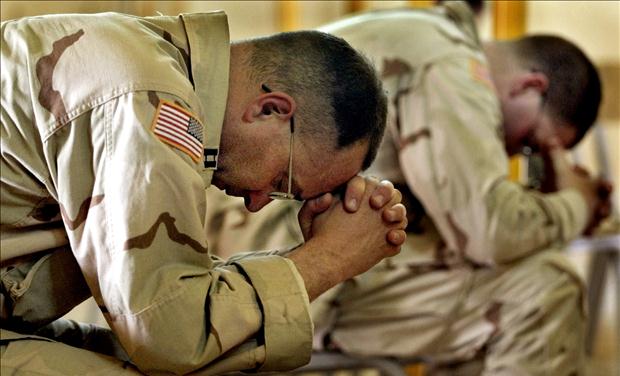
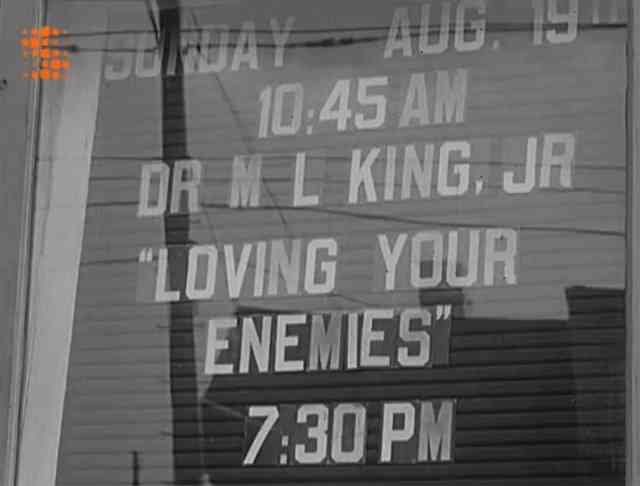
The need for this kind of wholesome conversation was reinforced at a recent reunion of our high school reading group. One of our young men training to be an Army Ranger remarked it’s a real dilemma trying to reconcile Jesus telling him to love his enemies and the Army teaching him to kill them. In the ensuing discussion, the young people expressed all sorts of differing opinions with empathy and creativity. The ideas ranged from the need for defense, to corporations profiting from the defense budget, to old rich politicians sending young poor kids to fight their wars, to a young lady reporting how her brother returned after several foreign campaigns mentally and physically damaged. Eventually a young woman began talking about a paper she wrote on the Just War Theory. Most of the group had never heard of it and were eager to learn if it could offer some help.
As I listened to the young people working with one another, I realized that kind of co-operation is next to impossible during our current election campaign. I recently returned from a trip to France where people first smiled when they learned from where I came and then made comments about how we are always electioneering and seldom governing. The implication was clearly that candidates sacrifice accuracy to gain votes. As campaigns become longer and longer, we find ourselves sacrificing the truth more and more.
In the end, I decided the best way to focus the conversation might be to ask some basic questions:
- Is peace possible in the modern world?
- Does peace really begin with me? What can I do?
- What should the Church expect from the government? Does the Just War Theory still work?
- What should the Church be doing? Is pacifism the only remaining option in a post-Christian world?
I don’t think there are obvious Christian answers to any of these questions. Each is debatable, each addresses the issues the young people brought up in their discussion, and each affords an opportunity to explore creative responses to the Army Ranger’s dilemma.
Interestingly, as I was composing the questions, I realized many of the best answers I heard in my ministry came from professional military men and women. Perhaps this points to their need to face the issues directly, just as the Army Ranger has to. More troublesome, perhaps, it also points to how much the rest of us try to sidestep these important questions.