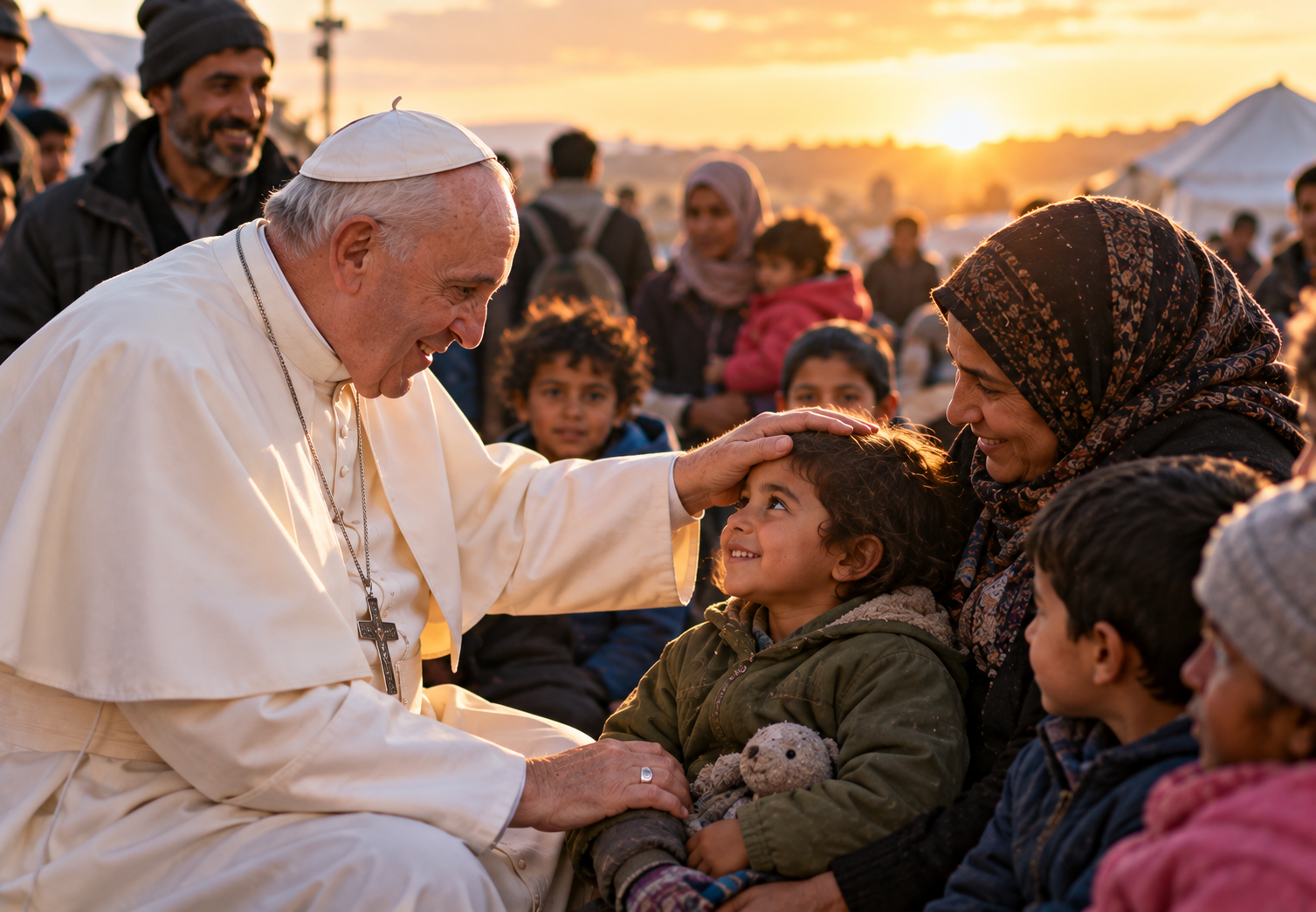

The term “civilization of love” first caught my attention when I read the conclusion of Pope Leo’s encyclical Magnifica Humanitas. Although I knew I had seen it previously, this was the first time I realized it was more than a passing thought. I was even more surprised to learn that every pope since Vatican II has used it.
I was intrigued, wondering if they were laying the foundation for a major historical change. Describing our goal as the Kingdom of God has become awkward because of its connotations of monarchy, top-down control, and a next-life location. “Civilization of love” certainly facilitates answering the Council’s call for dialogue with modern society
You sense Pope Paul had that in mind when he introduced the term in a Pentecost address. Pope John Paul II picked it up to counter the culture of death he found rising in modern society. And later, popes found it helpful in critiquing violence, materialism, elitism, and other forms of dehumanization.
The dominant feature is the dignity of every human person. By granting this, the popes acknowledge that Christians can work with nonbelievers of good will in the pursuit of the common good. A “citizenship of love” is built on small everyday acts of kindness anyone can perform.
As they have employed the term, the popes have increasingly acknowledged that truth can take different forms in different places and times. They disclaim the need for the church to provide a one-and-only uniform doctrine.
It doesn’t take long to realize that “civilization of love” is playing a central theological role in the major historical shift taking place in the Roman Catholic Church. Many cheer its reinforcement of traditional social positions, such as championing the vulnerable in society. They also think the concept expresses well our mission in the present world and our opposition to the culture of power we find rising around us.
However, rigid conservatives have been pushing back hard against the loss of absolutism in ecclesiastical office and theological doctrine. Many outright condemn it as heresy.
I plan to examine how each pope has used the term in the coming weeks. I hope in some small way to help spread it among Protestants.