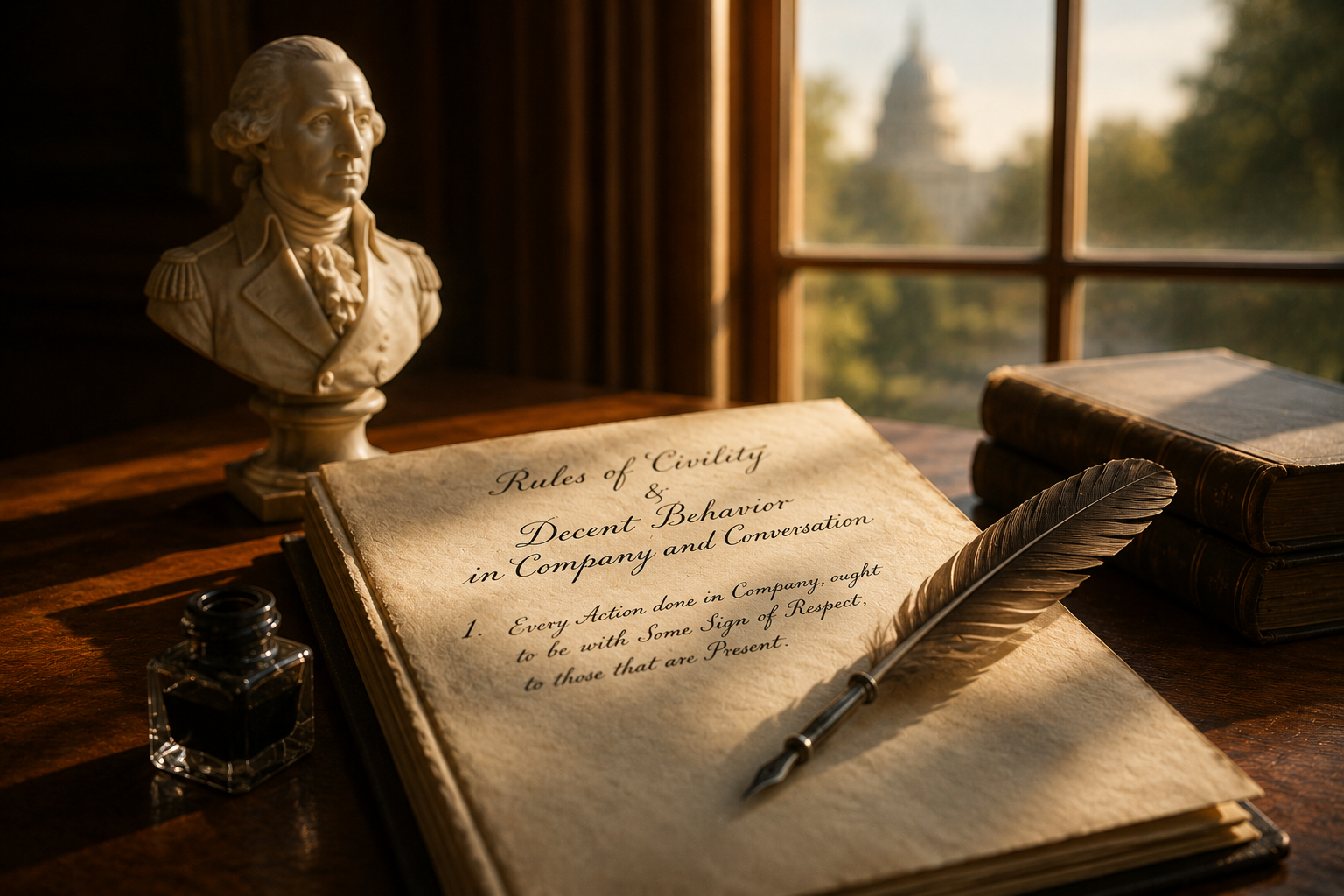

The closest thing to the “Rules of Civility” in the Bible is the Book of Proverbs. The “Rules” are supposedly the guidelines for success that George Washington used. Proverbs are purportedly those recorded by King Solomon from his experience.
The two documents share many of the same guidelines, such as taking the lower seat, letting others speak of your prominence, and associating with good people.
However, I am more impressed that both focus on the importance of speech. Most of the “Rules” and “Proverbs” deal with how we speak to one another.
Both recognize that our humanity depends on our use of language. Much of being civil involves using words properly.
The very first chapter in our Bible pictures speaking things into existence. It acknowledges that every word we speak creates something new in the world.
Our words reveal who we are. You do not know what I am thinking until I put my thoughts into words. I’m never quite sure where you are until you express yourself in words. The pursuit of truth involves a conversation in which we share our thoughts. And of course, the art of deception corrupts this basic human interaction.
Proverbs 25:11-15 puts it well. “A word fitly spoken is like apples of gold in a setting of silver. Like a gold ring or an ornament of gold is a wise rebuke to a listening ear. Like the cold of snow in the time of harvest are faithful messengers to those who send them; they refresh the spirit of their masters. Like clouds and wind without rain is one who boasts of a gift never given. With patience, a ruler may be persuaded, and a soft tongue can break bones.”
Words do far more than give life to objects and convey information. They bring order to chaos and create relationships. Say “I love you,” “I’ll care for you,” or “I’ll sacrifice for you,” and things are never the same.
In many ways, all education is learning our ABCs. We teach people the social skills to use words in different areas of life. As both the “Rules” and “Proverbs” maintain, true success unites people and seeks truth.
Without words, we are animals operating on survival of the strongest. Raw power determines everything. Much of our public conversation lately has been a return to this kind of barbarianism. It uses words as weapons to divide people, destroy opponents, and hide the truth. Our humanity and our faith call for a return to civility.