
We are just beginning to appreciate how much the huge databases modern technology makes available are affecting our thoughts about truth. Most of us are aware that merchants use them to sell their products. If we look for a pair of shoes online, ads for others pop up on our Facebook for several days. We hear politicians speak of using them to decide on which districts they should focus their resources. By doing so, they can win the electoral college while losing the popular vote. Or, they can gerrymander districts insuring that their party will win the representative election for many years.
Yet, chances are most of us have not given much thought to how databases change our understanding of truth. Broadly speaking, I have been defining truth as the way communities interpret facts– the way they explain the kaleidoscope of sense data that constantly bombard us. Critical, then, are the methods various schools of thought use to understand this data.
Traditionally, communities used a set of beliefs as a standard of truth by which they read the past and the future. In modern times, many people laud science as a more accurate and unifying method than the different ideological views that once competed within the larger community. It reduces all factual experience to that which can be measured empirically. Truth is regarded as a theory that works until something better is discovered. That discovery is usually made possible by developing more sophisticated machines. For example, nanotechnology was not possible until machines were developed that could detect nanoparticles.
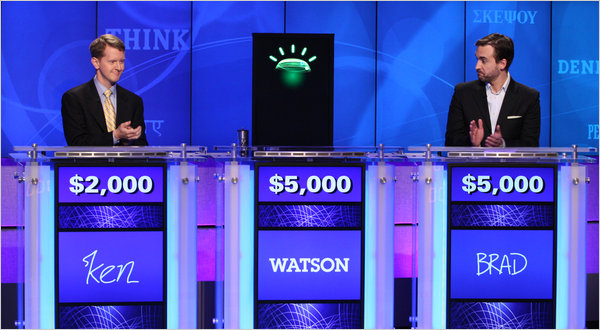
The huge databases seem to play a similar function. Futurists, such as Ray Kurzweil, believe that by 2045 machines will be able to process enough information to come up with the most efficient way to solve every conceivable human problem. Truth will not involve a human conversation but a mechanical analysis. It will be based on how things work rather than human aspirations for the good and beautiful life. A complex array of databases will offer a picture of my true self or a true reading of my community.
We might get a taste of what is happening by the juridification taking place in the legal system. Traditional law codes served as guidelines for justice more than fair ways to settle conflicts of interests between individuals. Justice had to do with an understanding of how people lived together in community. Any reading of the Jewish Torah makes clear it presents teachings that cannot be totally reduced to laws. Take care of the alien in your midst has more to do with attitude than specific commands. Judges used the codes as standards but also applied their wisdom to determine how each offender standing before the bar should pay their debt to society.
Juridification is the attempt to pass laws to cover every conceivable breach of contract between individuals. Those championing this approach claim the capacity of modern computers makes it a real possibility promising more fairness than traditional justice systems. A mechanical machine able to amass enough data and then analyze it adequately will determine truth rather than a wise judge. Notice that values associated with traditional justice have become irrelevant.
A similar understanding is presumed in the digital humanities championed by some in this electronic society. These humanities are not based on the wisdom of the past as determined by conversation in the present. It recognizes no canons such as the Bible or Shakespeare. Truth is not based on standards determined by the community or God but simply on the patterns and trends that emerge in massive data systems. It does not depend upon what we now speak of as critical thinking, but the development of more sophisticated machines. Again, many traditional values associated with Western civilization become irrelevant as machines amass and analyze global information.
In many ways, this sounds to me like the perfection of decision-making based on supposed historical cycles. Some economists make decisions about investments based on these cycles that they take as inevitable. Some politicians do the same in terms of war and peace. They claim after a certain period of peace, war is inevitable. Frighteningly, some of these guys have served at the highest level of government in the past and the present. And, of course, some popular theologians also claim to read cycles in works such as the Book of Revelation. Big Data would be far more able to discern and fine tune these cycles.
Traditional Christian teaching has always rejected this kind of thinking as losing the singularity and sacredness of every person as well as the totality of the whole community that goes beyond the sum of its parts. Beyond that, defining truth as simply the way things are running in this world has always been challenged. Christianity believes humanity’s fundamental problem is a selfish human nature rather than a lack of information. Our hope is transforming that nature rather than developing more sophisticated machines. And, the way to that goal lies in trusting people and God more than placing confidence in machines.
I find myself making an observation and raising a question that illustrates the limitations of using data to discern truth. The observation is that the last presidential election seems to have been won by a candidate who used data to target the required votes and got elected by people who believed he knows what works in this modern world. They were willing to give him their vote even though it was apparent he had no traditional values at all. Supposedly, this should have had a unifying effect by overcoming the ideological divisions of the nation. Instead it has proven to be terribly divisive.
The question I raise concerns whether a sophisticated machine would call for the execution of Jesus and Socrates, the founders of Western society, as enemies of humanity. Contemplating that one provokes all kinds of insights.