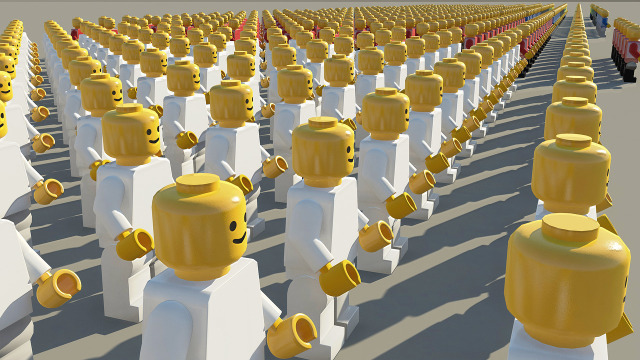
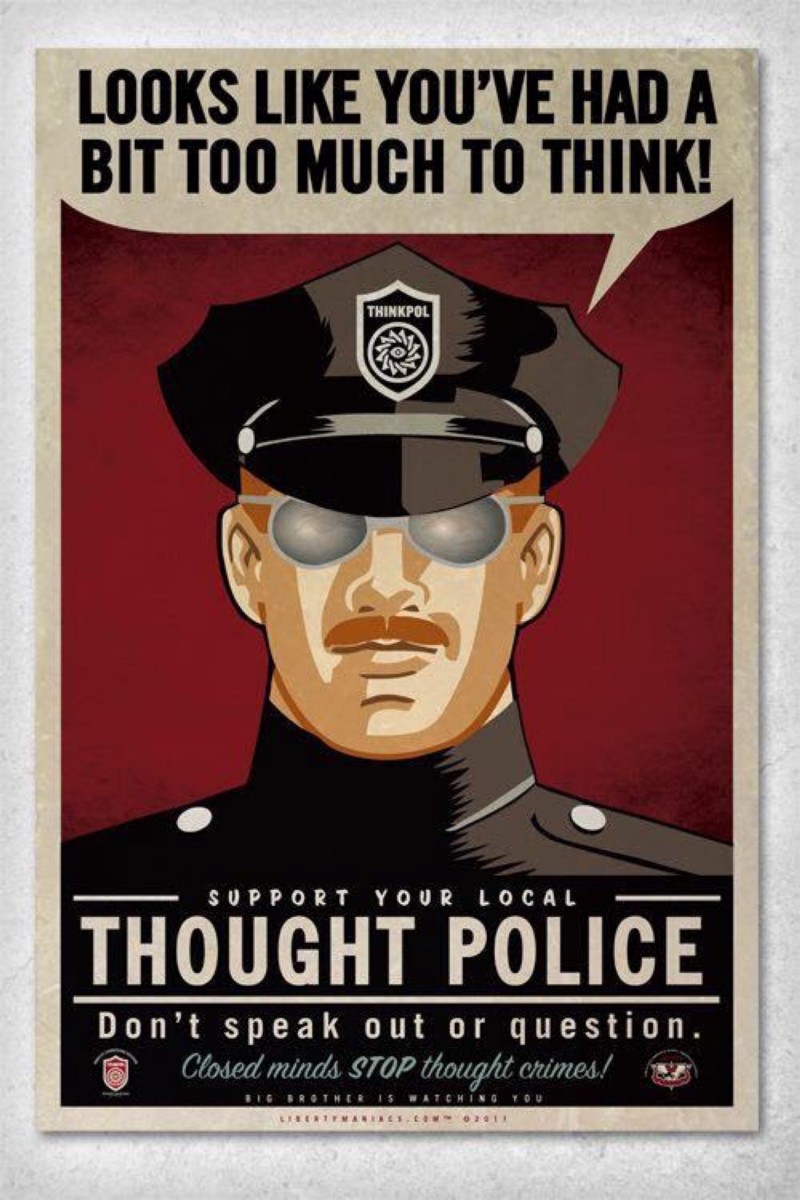
Because we are confronted every blasted day with a new manipulation of truth, it might help to trace the development that has led to this perilous situation. Many believe it was first brought to our attention by George Orwell who introduced “newspeak” in his novel 1984 (1949). This is a fictional language created by the authorities to keep the public under their control. Newspeak removed any words that might promote freedom, rebellion, or alternative thinking, replacing them with those without any shades of meaning. This left only simple dichotomies, such as pleasure and pain, happiness and sadness, goodthink and crimethink. In doing this, newspeak limited the ability of the masses to think and react in ways that the authority deemed dangerous to the establishment.
Orwell certainly describes what the Nazis did when they redefined and invented words to disguise the immoral nature of what they were doing. However, our own government has done the same with concepts such as “enhanced interrogation,” “collateral damage,” “unlawful combatants,” “security detainees,” and, increasingly, “credible evidence.” These are always justified as attempts to be as accurate as possible, but it does not take long to see that they are removing words from their real contexts to prevent us from discussing what is really happening. “Enhanced interrogation” seems to be police questioning stepped up a bit to protect many good people from a few bad ones, not inflicting unbearable pain on a living human being, the kind of torture that used to appear at the beginning of ethics textbooks as an activity that all civilized people could agree was evil. “Collateral damage” sounds like an ethically justified practice rather than the bombing of innocent children. Why would anyone suspect that “deficient spending” might be a term invented by the financial community to show that the present financial crisis was caused by government spending? Or that the “trickle down” theory was invented by the wealthy to justify economic practices that have continually widened the gap between the rich and poor since 1972.
Way back in 1985, Jacques Ellul claimed the managed control of newspeak was no longer the greatest threat to language. He thought the modern technological society changes the nature of words in far more subtle, hardly detectable ways. Rather than humans using words to shape and give meaning to their environment, now the artificial environment of technology shapes words and their users to fit the system.
Elull spoke of “commonplaces” that he felt were far more dangerous than newspeak. Unlike cultural wisdom that informs and inspires, they stimulate compliance to the global technological system. They consistently trump traditional cultural teachings. Here are a few of the 33 “commonplaces” that Ellul lists: “You can’t act without getting your hands dirty,” “The main thing is to be sincere with yourself,” “Modern man has come of age,” “Nobody can help anybody else,” “Freedom is obeying necessity,” “The machine is a neutral object and man is its master,” “No more words, give us action,” “Work is freedom,” “Women find their freedom through work,” “The spiritual side of life cannot be developed until the standard of living is raised,” and “You can change anything to suit yourself.” As these slogans replace the myths and narratives of our culture, they come to serve as wisdom.
If Ellul was correct, most have responded that a number of these commonplaces are true. He would ask us to give a little more thought, believing we then would come to see at the most they are half truths that can be used to short circuit more profound thought. But this is just the beginning, let me continue next week with the continued development of the crisis in language.