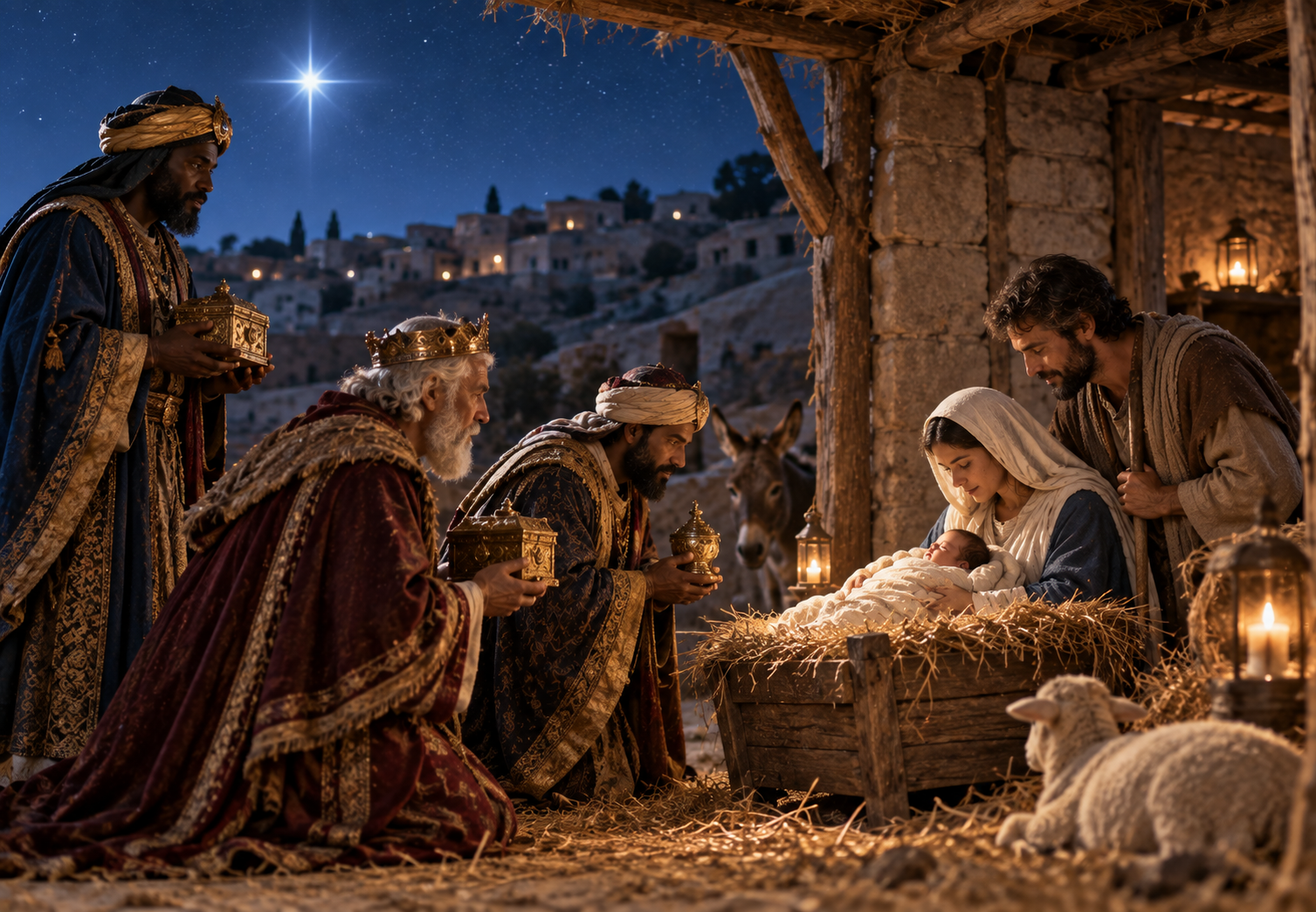
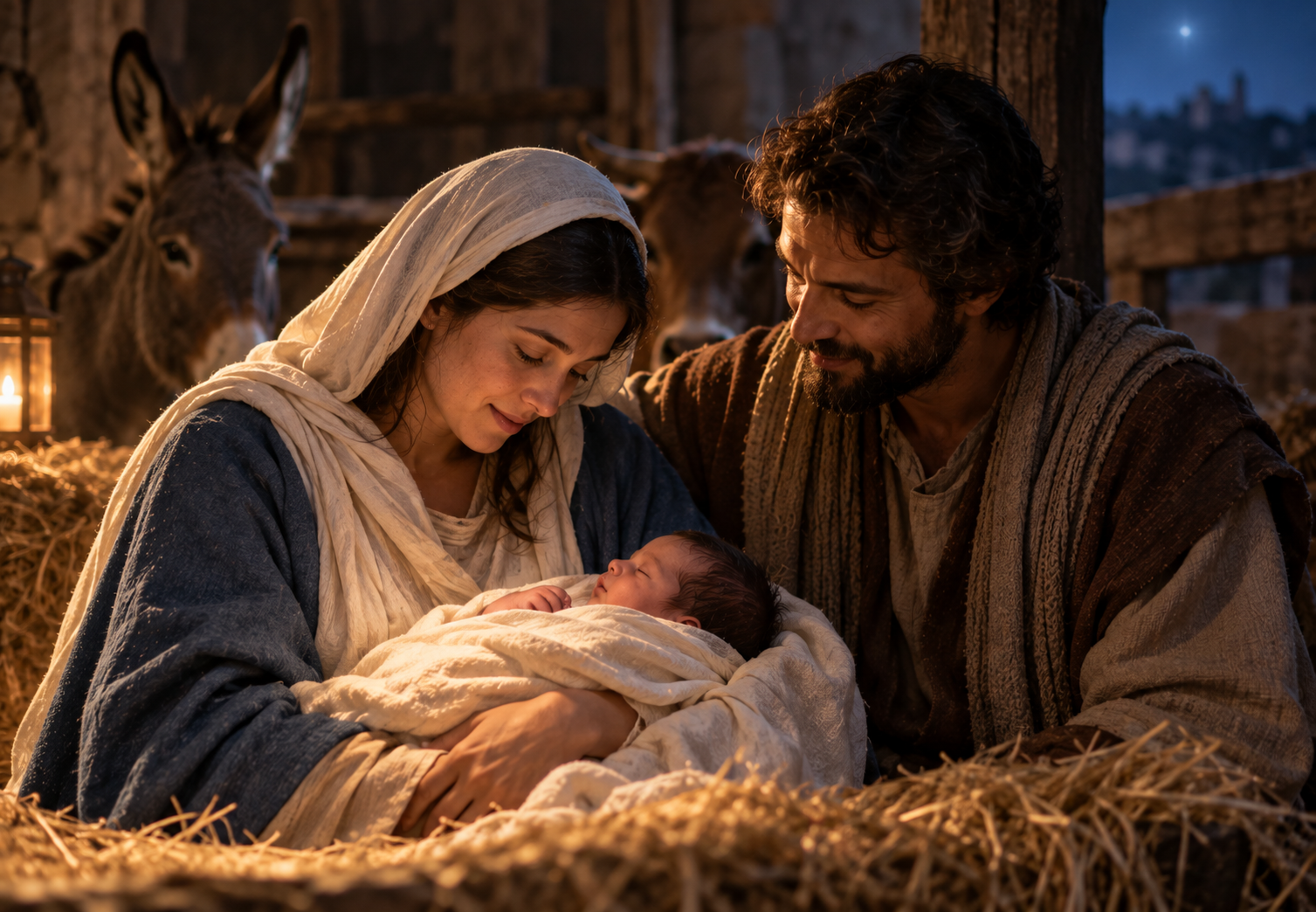
Christmas forces us to repent, to rethink all our assumptions about God. We naturally think a god must be completely separate from and absolutely superior to us in all ways. A god is to be a perfect being, omnipresent, omnipotent, and omniscient. But incarnation proclaims Immanuel, God as human dwelling among us. (John 1: 14) Luther claims to understand this we must start with the baby Jesus held by his mother Mary. “Let us then meditate upon the nativity just as we see it happening in our own babes. I would not have you contemplate the deity of Christ, the majesty of Christ, but rather his flesh. Look upon the baby Jesus. Divinity may terrify man. Inexpressible majesty will crush him. That is why Christ took on our humanity, save for sin, that he should not terrify us but rather that with love and favor he should console and confirm… He was a true Baby with flesh, blood, hands, and legs. He slept, cried, and did everything else that a baby does only without sin.”
The divine is found in the human. Outrageous! But this is where we begin: The Eastern Orthodox Church builds their faith on the Incarnation. In a sense, you can summarize their theology as “the divine become human, so the human can become divine” Western Christianity builds its faith on the Crucifixion and Resurrection. In a sense you can summarize our theology as “God dies in Jesus so the human and the divine can be one” (atonement). They say much the same thing from different angles.
All three of our creeds clearly are trying to proclaim and explain how God can be born, suffer, and die. The Athanasian presents the final formula: Jesus exists fully as God and fully as man. We can not break him into parts such as saying his soul is divine but his body human or that at one time in his life he is divine, for instance doing miracles, and at other he is human, such as not knowing when the Last Judgment comes. We also can not regard Jesus as God incognita, able to throw off his disguise at any moment. God truly emptied himself. (Philippians 2: 5-11) becoming like us in every respect (Hebrews 2:17) He is fully divine and fully human. He is born, grows, and learns as true man and true God, he works as a carpenter and rabbi, teaching and healing as true man and true god, he is rejected, tortured, suffers, and dies as true man and true God, he is resurrected as true God and true man.
What does this mean for us today? First, as Colossians 2: 8-10 says if the fullness of deity dwells in Jesus Christ then we meet God in him, not in some philosophical concept. Our relationship with God is always personal, not academic. When we want to know about God or about true humanity we look to the words and actions of the man Jesus.
Second, in order to understand the story of Jesus it is necessary to understand the story of his people, the Jews. The God we worship participates in our history. He is the God who came to Abraham, Isaac, Jacob, David, and Isaiah, and all the others.
And third, Christmas reminds us that God continues to participate in our story now and in the future. He still dwells among us in the Church, the Body of Christ gathered around Word and Eucharist, and we find him in even the least of our brothers and sisters.