A major factor in our present inability to establish a common understanding of truth is certainly globalism. In the past, geographic separation resulted in different lifestyles developing in the eastern and western worlds.
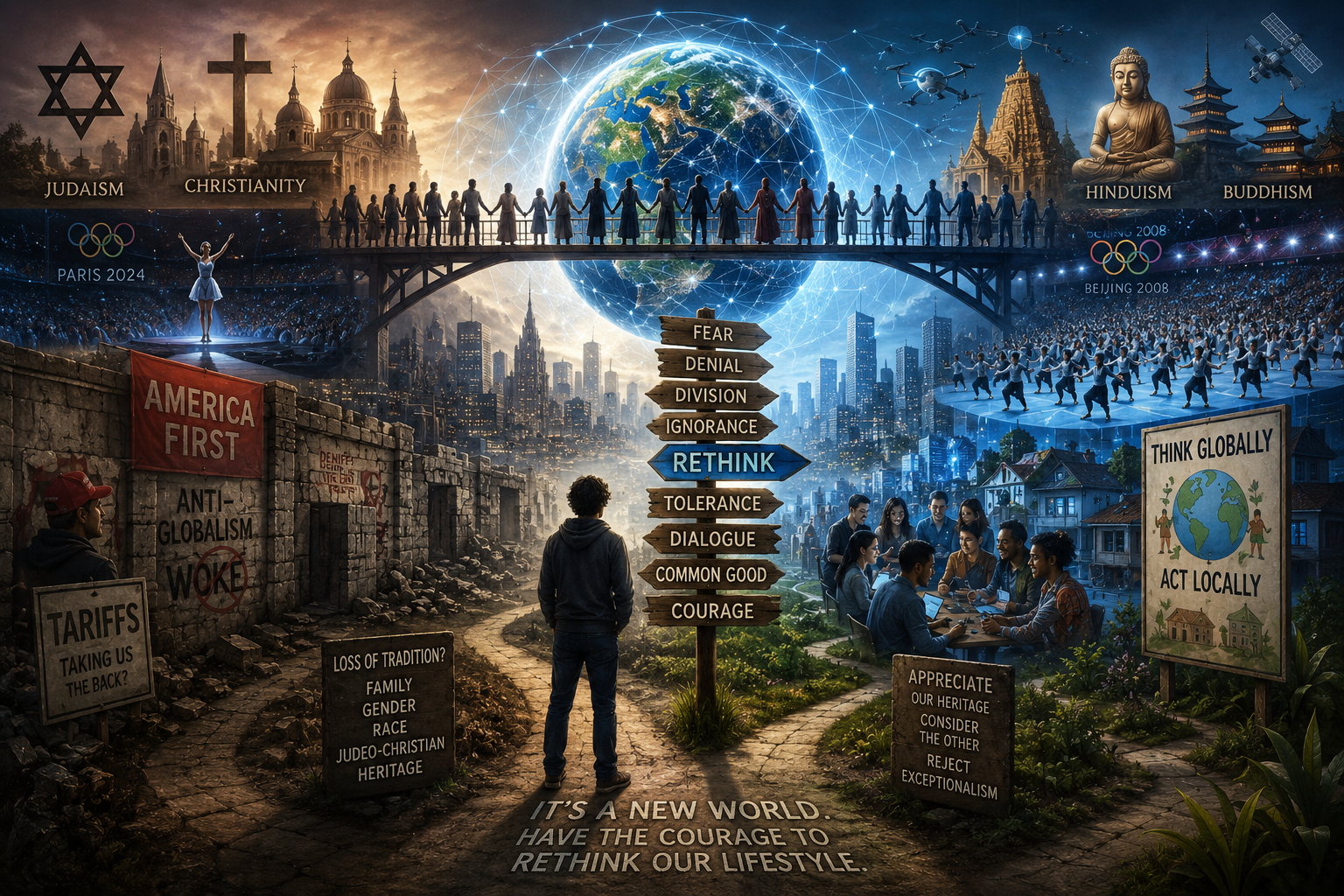
You see that in their religions: Judaism and Christianity in the west, Hinduism and Buddhism in the east. It was also apparent in recent opening ceremonies of the Olympic games. The one in Asia featured massive groups performing amazing synchronized dances and exercises. The one in Europe focused on individuals featured for their unique ability.
Modern technology has overcome the geographic distance. It used to take months or years to deliver information to people on the other side of the world. It can now be done instantly. We have become so interconnected that we are economically dependent on each other.
This has greatly challenged the traditional ethics and religions of both civilizations. We are forced to rethink what we believe when confronted with different understandings of life. The confusion is evident when traditional university courses in western civilization become contemporary culture courses before being completely dropped.
The situation has produced some paranoid reactions, such as the MAGA movement’s efforts to make America First Again. They frequently acknowledge that they oppose globalism, sometimes linking it to woke society, often presenting it as a threat to democracy and capitalism. They try to deny reality by imposing tariffs and pretending we can base our present lives on what worked in the past.
There are also more sophisticated movements that lament the loss of western civilization’s understandings of family, gender, and race which they associate with our Judeo-Christian heritage. They, too, deny our present reality.
Most try to handle this by ignoring ethical and spiritual values. Life becomes simply developing methods for getting what you want. And of course, that has given us our present political warfare.
The situation demands creative rethinking that considers the other, while appreciating what we have. I often think of the old environmental slogan: think globally and act locally. Working towards the common good demands a tolerance that does not lose one’s self. At the same time, it rejects exceptionalism whether American or Christian.
Nobody really knows where we’re going, but it’s already a New World. We have to have the courage to rethink our lifestyle.