
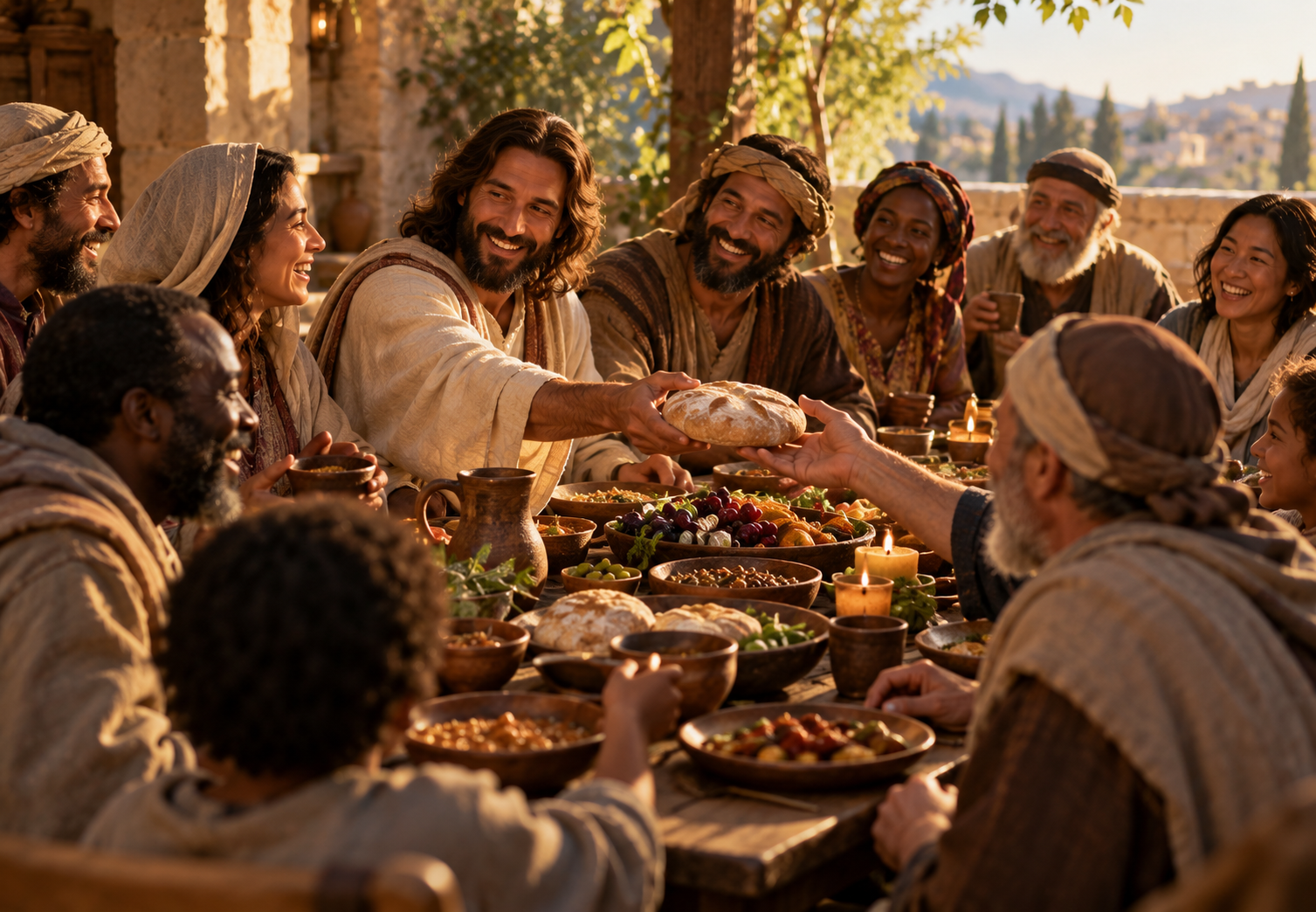
Although Jesus did not offer a comprehensive picture of salvation, he often referred to it as a dinner. Quite a few times his parables proclaimed the Kingdom of God is something like a meal or a banquet. Almost all his resurrection appearances, surely previews of salvation, included eating with his disciples. He used the symbol to promise many of the same things we heard in Isaiah’s Peaceable Kingdom, Revelation’s New Jerusalem, and the Gospels’ Christmas Stories.
Everyone shares around the dinner table. It is perhaps the only place where we practice a voluntary form of communism. Everyone passes the food, taking only what they truly need, so all have enough.
Salvation is again offered first to the needy. Jesus is constantly criticized for eating with sinners and tax collectors. Matthew 21: 28-31 even includes prostitutes. In the marvelous parable of the big dinner, God eats with riffraff from the alleys. (Luke 14: 15-24). This certainly doe not exclude the privileged, but it makes clear they will not be sitting at a head table.
The dinner motif also offers room for many and all kinds. At one place Jesus feeds 5000 people. In Luke’s Great Dinner, the owner sends his servants out twice to round up all the needy they can find so his huge hall can be filled (Luke 14: 15-24). At another place Jesus says people will come from the east and west, the north and south to eat at table in the Kingdom of God. (Luke 13: 29)
And the table has always been a place of safety and peace. It was discourteous and rude to bring a weapon to the table. It was barbaric to attack your enemy at meal time. That says something about modern warfare that calls such practices naive.
The dinners Jesus describes are always tremendous celebrations, because God is one of the companions sharing bread. The gatherings are face-to-face in an intimate setting. Sometimes he speaks of them as wedding banquets (Matthew 22: 1-10) where he is the groom and the Church the bride. In fact, when we consider the long tradition that begins with Hosea, we might describe this as the restoration of a failed marriage. The same theme is echoed when the gracious father throws a feast for his returned prodigal son.
Of course, the Lord’s Supper is central to this picture. The Church’s main act of worship is a meal where we share the first fruits of salvation, declaring it as a foretaste of the feast to come.
I think the primary message I hear in this picture is its intimacy. In a world of self serving institutions that survive, because they are “too big to fail”, a dinner sounds warm and caring. I can go for that.