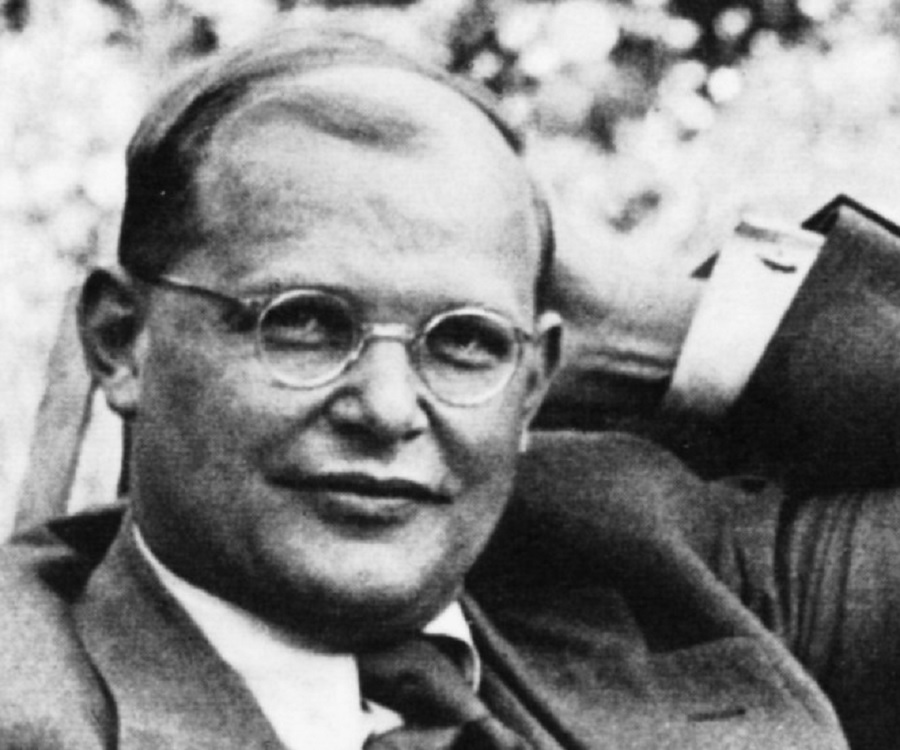

Throughout his writings, Bonhoeffer repeatedly contends the Church must commit herself to living in complete honesty and by the standards found in the scriptures if she is to save the world from self-destruction. Only in this way can she avoid the sickening religiosity that ignores the real dangers in a modern evil culture. In the Letters, he describes this proposal as a religionless Christianity that confronts a world come of age. In the very brief outline for the third chapter of his proposed book, he uses the following powerful words to describe what he thinks this would mean.
“The church is her true self only when she exists for humanity. As a fresh start, she should give away all her endowments to the poor and needy. The clergy should live solely on the free will offerings of their congregations, or possibly engage in some secular calling. She must take her part in the social life of the world, not lording it over people, but helping and serving them. She must tell people, whatever their calling, what it means to live in Christ, to exist for others. And in particular, our own church will have to take a strong line with the blasphemies of hubris, power-worship, envy, and humbug, for these are the root of evil She will have to speak of moderation, purity, confidence, loyalty, steadfastness, patience, discipline, humility, content and modesty. She must not underestimate the importance of human example, which has its origin in the humanity of Jesus, and which is so important in the teachings of St. Paul. It is not abstract argument, but concrete example which gives her word emphasis and power.”
I think it is significant that Bonhoeffer does not specifically mention the Nazi culture here or, to the best of my recollection, in any of his other books. He appears to believe his experience of Hitler’s regime has opened his eyes to the basic character of any evil culture and the church’s role in combating it.
Evil prevails by discrediting truth so that cultures loses hold of reality. Satan lies in tempting individuals to go down self-defeating paths. Because evil depends on such dishonesty, one of the Church’s primary responsibilities has always been to speak the truth.
As I read Bonhoeffer indirectly describing the evil of Nazi culture as the lie, I found myself increasingly mindful that I am surrounded with lies from sections of the government, corporations, media, advertising, and sadly religious communities. Truth is discredited as fake news; the findings of science are denied.
We are trained to regard this as harmless because it is supposedly the way humanity operates. Much of our education teaches us how to cope with this hypothetically innocuous behavior.
I think Bonhoeffer would maintain when we talk and think this way, we have lost contact with reality and the Church must help our culture regain its bearings. In order to do this, she must find the courage to be completely honest. That will mean exposing dishonesty in all its forms, because the lie is the root of evil. With the loss of other traditional standards, it also means returning to the scriptures for guidance. And as we have seen, Bonhoeffer thinks if we do that with complete honesty we have to acknowledge Jesus intended his followers to live by the spirit of the Sermon on the Mount.
I suspect many fear if the Church followed Bonhoeffer’s counsel, she would lose a lot of members. He never referred to size but acknowledged it would mean some would leave but also that others would come.