
Last week, I suggested there is a subversive aspect to the Gospel. “Counterculture” might be a better word as it conveys promoting values that are counter to those of the establishment but not necessarily working actively for its overthrow. Even better would be “prophetic” if it conveyed using Jesus’ teachings to critique society.
Certainly, the Church was prophetic during her first 300 years. Nowhere was she considered part of the “establishment.” People often cite Romans 13 where Paul counsels obeying the governing authorities in matters of law and order. They pass over the many conventional social customs he constantly opposes throughout his letters and his call for Christians to confess “Jesus is Lord,” not “Caesar is Lord.” The New Testament concludes with the Prophet John in Revelation, exiled as a political prisoner for telling his churches to have nothing to do with the Roman Empire. You get an idea of how dangerous prophecy can be by noting how many churches in Rome are dedicated to soldiers who were martyred for refusing to fight after they became Christians.
Things changed when Constantine recognized the Church as a legitimate part of the establishment in the fourth century. Suddenly you had two very different kinds of gospel communities. The parish churches applied the Gospel to everyday life. They saw themselves participating responsibly in governing the larger society. You see the challenges as emperors and popes argue about how to share power.
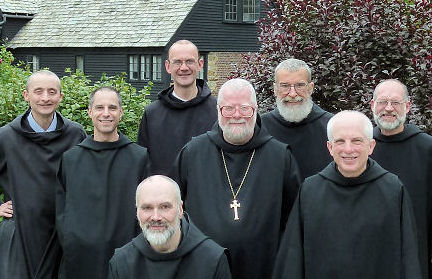
The second kind of community was monasticism that provided an option for those who wanted a purer Christian life. We often forget the monasteries were very, very large self-sustaining, separate, alternative communities.
With the Reformation, all kinds of gospel communities emerged, often depending on the choices of the governing authorities in different areas. For instance, in Calvinist Geneva, the Church controlled the government, and in Anglican England, the government controlled the Church. You had groups such as the Amish, who completely separated themselves from the government, and Lutherans, who saw themselves as independent partners with the State. And these are just a few.
You get the idea that as you get further away from Jesus, you get a greater and greater variety of gospel communities. You also sense that this situation along with the religious wars of the period damaged the prophetic witness. Christians could not agree on the message the Church was to proclaim. They demonized other gospel communities. Many felt the Church lost her right to speak to society in the name of Jesus. More and more people confined their religion to their private lives.
That makes determining what a gospel community should be in our time very difficult. This is especially so in the United States, where each immigrant group brought its own national religion. Besides that, the present political situation contributes to equating Christianity with unquestioning patriotism on the one hand or popular psychology on the other. Nonetheless, if Christianity is about the redemption of the world, we are talking about making changes in society. If we want to follow Christ, we have to ask what kind of transformation he asks of us as individuals and as a community. Let’s see what that might be in the coming weeks.