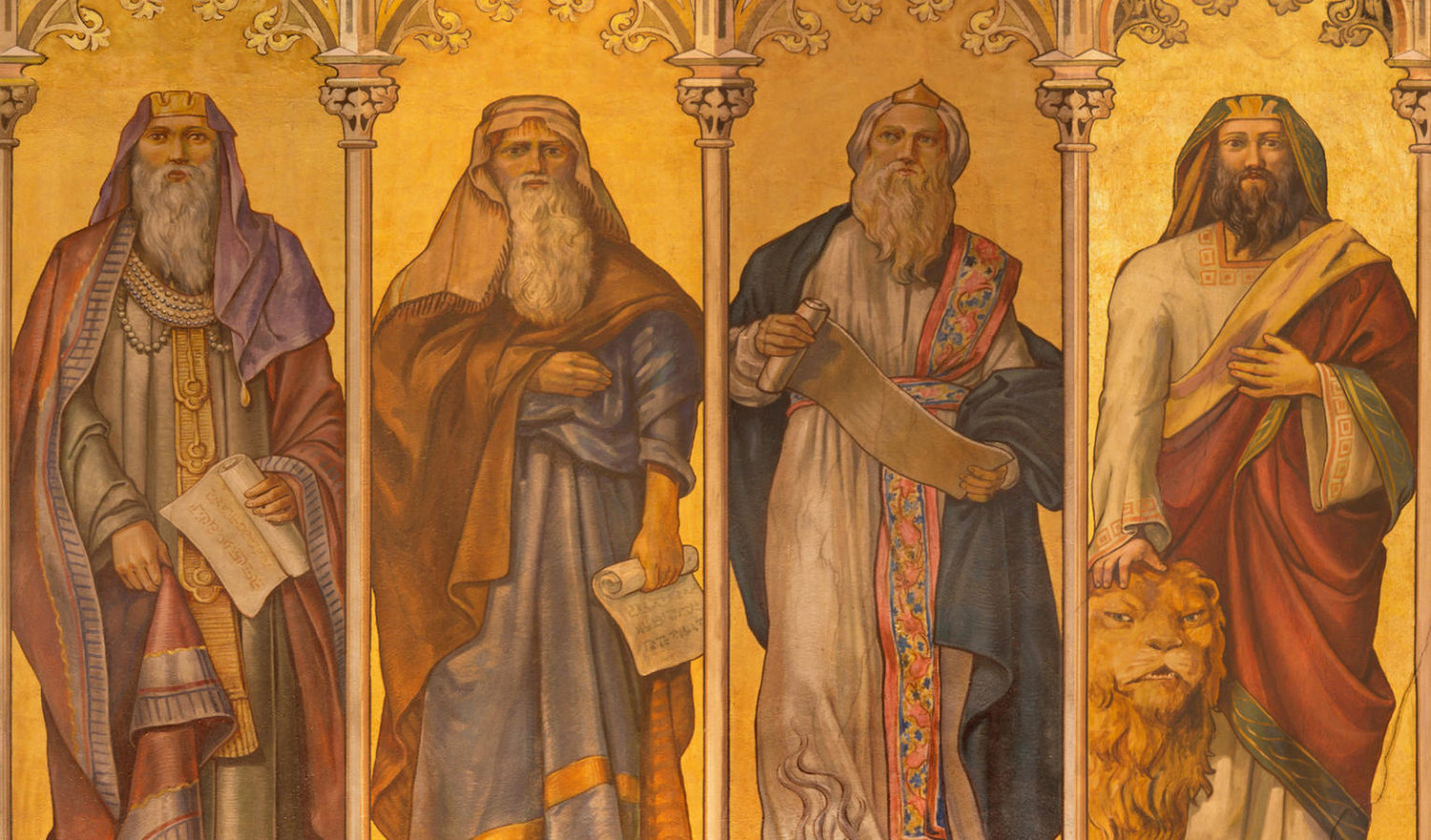

Chapters 40 through 55 contain some of the most beautiful and oft-quoted passages in the Bible. They record how Isaiah’s school interpreted suffering in the sixth century BC.
Two hundred years have passed since the Assyrian Empire conquered Israel and besieged Judah. Isaiah had assured them their suffering would end if they began living by God’s ways, and he promised God would send a righteous king to help them do that.
Two hundred years have passed, and they’re suffering more than ever. The Babylonian Empire conquered Judah, destroyed their homes, and carried their best people into captivity. Second, Isaiah mentions that people ask: Has our faithfulness been in vain? Has God forgotten or abandoned us? Are foreign gods more powerful? Have we been misled in believing God exists at all?
Then he reaffirms that they bring the suffering upon themselves because they do not live morally. “I am the Lord your God, who teaches you what is best for you, who directs you in the way you should go. If only you had paid attention to my commands, your peace would have been like a river, your well-being like the waves of the sea.”
However, a shift takes place describing God‘s part in the suffering. He is not a king punishing disobedient subjects. He is not a father disciplining wayward children. He is the Creator of All using Israel to gather the rest of the world under his care. “I will take hold of your hand. I will keep you and will make you to be a covenant for the people and a light for the Gentiles, to open eyes that are blind, to free captives from prison, and to release from the dungeon those who sit in darkness.”
Second Isaiah writes, “Fear not. I am with you. Take comfort for your suffering will end soon. I shall lead you back to your homes. I shall bring peace. I shall restore Jerusalem and my temple. All the other nations of the world will marvel when I do this.”
Again, God will do this by sending a leader described as his servant. Well, actually, it’s servants. He uses the term to describe first the Emperor Cyrus to whom he gives the strength to overcome the Babylonians and free the Israelites even though this Persian does not worship him. Second, he refers to a future righteous king who will practice steadfast love, bring justice, and care for the weak. Finally, he refers to the Israelite people who remained loyal even though others believed they were forsaken. When God raises them from their weakness to glory, other nations will rush to worship Him.
Scholars detect four servant hymns in this section (Isaiah 42:1-7, 49:1-7, 50:4-11, and 52:13-53:12) that the first Christians used to understand Jesus’ ministry. He did not fit the popular picture of a messiah as a powerful king whose victories unite the Hebrew nation. However, he did fit Isaiah’s description of the servant who steadfastly followed God‘s ways even if it meant he had to suffer and die. God raised Jesus, just like he promised to exalt the weak Hebrew nation.
In this context, it is ludicrous when some Evangelicals declare Donald Trump is a modern-day Cyrus whom God is using even though he seldom worships. Trump in no way fits Isaiah‘s picture of God’s servant as one who cares for the weak. He makes fun of the needy and openly mocks anyone who suffers as a loser. He destroys programs that care for those who do not have enough and helps the wealthy become richer.
This has created a situation in which many are left to suffer. Good people worry about how we can ever recover from this injustice. Isaiah’s words call on us to remain steadfast in following Christ until God rescues us and uses our experiences to draw others into the good life.