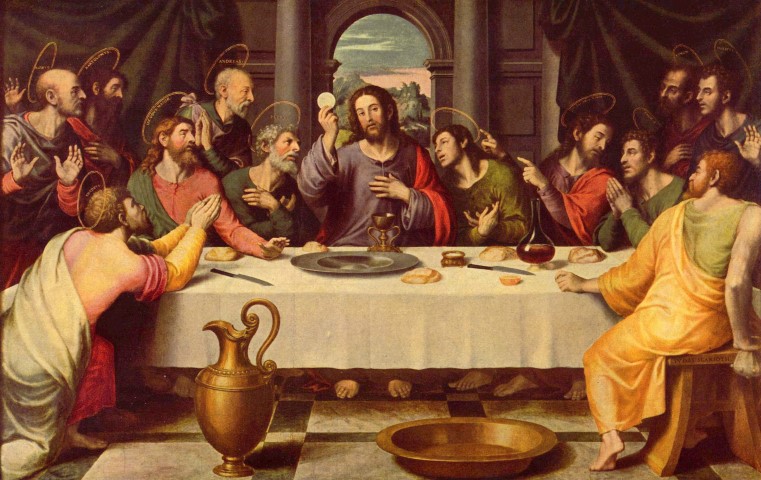
The official title of the communion meal is the Eucharist, a Greek word meaning thanksgiving. By examining how this title applies we can learn a lot about the sacrament. First, thanksgiving is given a prominent place in the official account of the last supper in I Corinthians 11. That account is the basis of the formula we often describe as the Words of Institution. In it, the bread was associated with thanks given at the beginning of the meal and the wine with the thanks given at the end. It is assumed a full-fledged dinner takes place between them.
The thanksgiving is the same sort as the grace we offer at the beginning of our family meals. Food is not eaten at our meals, at the last supper, or at any Eucharist without acknowledging we eat only because of the graciousness of God. None of us lives without food; none us have food from our own efforts alone. Food is on our tables only because God provided the land, sun, rain, and growth; farmers grew the food, laborers reaped it, suppliers managed its transportation into our area, store owners and employees made it available for our purchase, someone cooked and placed it before us. Anyone who does appreciate this graciousness of life lives a very, very shallow, self-centered life.
All of the meals we share, including the Communion, remind us none of us are self-made people. We all depend on grace, God’s and other peoples’. This is especially true in modern society that is based on a fine division of labor. Everyone is a specialist who relies on other specialists doing their job. We do not make it through breakfast without using food, clothing, machines, and all sorts of other supplies made in distance lands. Nobody in our society makes it on their own. The prayers with which we begin and end the day should all include hearty, deep-felt thanks.
Every Eucharist reminds us we need grace, God’s and each other’s, if we are to live an abundant life. Significantly, the sacrament focuses on God’s gifts. The sacrament especially gives thanks for the last supper we associate in a special way with his ministry. It was there his love was evident as he washed his friends’ feet and promised to give his life for their welfare. However, the sacrament also gives thanks for all of God’s acts of steadfast love. All of this should inspire us to work carefully to make sure every Eucharist expresses thanksgiving very clearly.