
The most important challenge for a Eucharist liturgy is to express a community meal rather than an institutional ritual. The Church has not always done a very good job with this one. Too often, the service is regarded as fulfilling requirements that enforce the authority of the institution. Only those commissioned by the authorities are allowed to preside. Each part must fulfill official prescriptions. The insititution also decides who qualifies and who does not, usually making the distinction based on their parochial ideas rather than Jesus’ teachings.
The result has been the acceptance of practices that turn Jesus’ intent upside down. His last supper emphasized all were friends sharing food and themselves with one another. Our rituals often featured lay people kneeing before a robed cleric who places a wafer directly on their tongue. The inference is that only officials, in some cases these must be males, are allowed to touch such a sacred object. Just about everything conveys a sense that this is an act of magic. A magician provides a magic object for people who have gathered primarily to receive their special supernatural thing.
Various church bodies have reduced the meal to a small wafer or very small glass of wine and piece of bread. Lately intinction has become more popular where people line up to receive a piece of bread or wafer that they then wet in a cup of wine before eating it. Often this is done while moving as if the sacrament were something like a drive through window at a fast food restaurant. There are a variety of reasons for these reductions from official presumption to time saving.
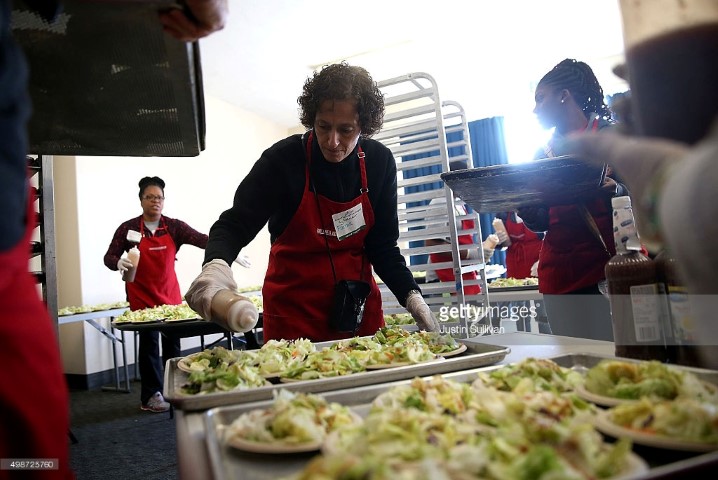
If the intention is to remember the last supper, it should be evident that people are participating in a real meal. At the least, the leaders should regularly teach that we talking about a full-fledged meal placed between thanksgivings made with bread and wine. There should be some recognition that we offer a simulated but hopefully symbolic meal, even to acknowledging that part of the reason we do this is to save time. If we were honest, some might start pressing our taking the time to make the sacrament meaningful.
Of course, our practice could completely defeat any effort to teach. In that light, I think as much as possible we should try to practice the sacrament in the round. At least some people should be looking into the eyes of others who share the meal. Everyone should receive a large piece of bread preferably broken off a loaf signifying the unity of the church. All should be able to have a decent drink, hopefully poured from a pitcher or offered from a common cup.
Another way toward meaningful participation might be to have some Eucharists during the year celebrated at a time when a full meal can be served between the two thanksgivings. It would be great if we could follow the Brethren practice of including a foot washing at these.
For sure, all should be welcomed to the Lord’s table. There can be no worse time to exclude people. To do so while we proclaim this is the way we remember meals Jesus shared with people is to be horribly hypocritical. And this is too often the way the world sees us these days.