
Lesson 10: The Papacy and the Civilization of Love

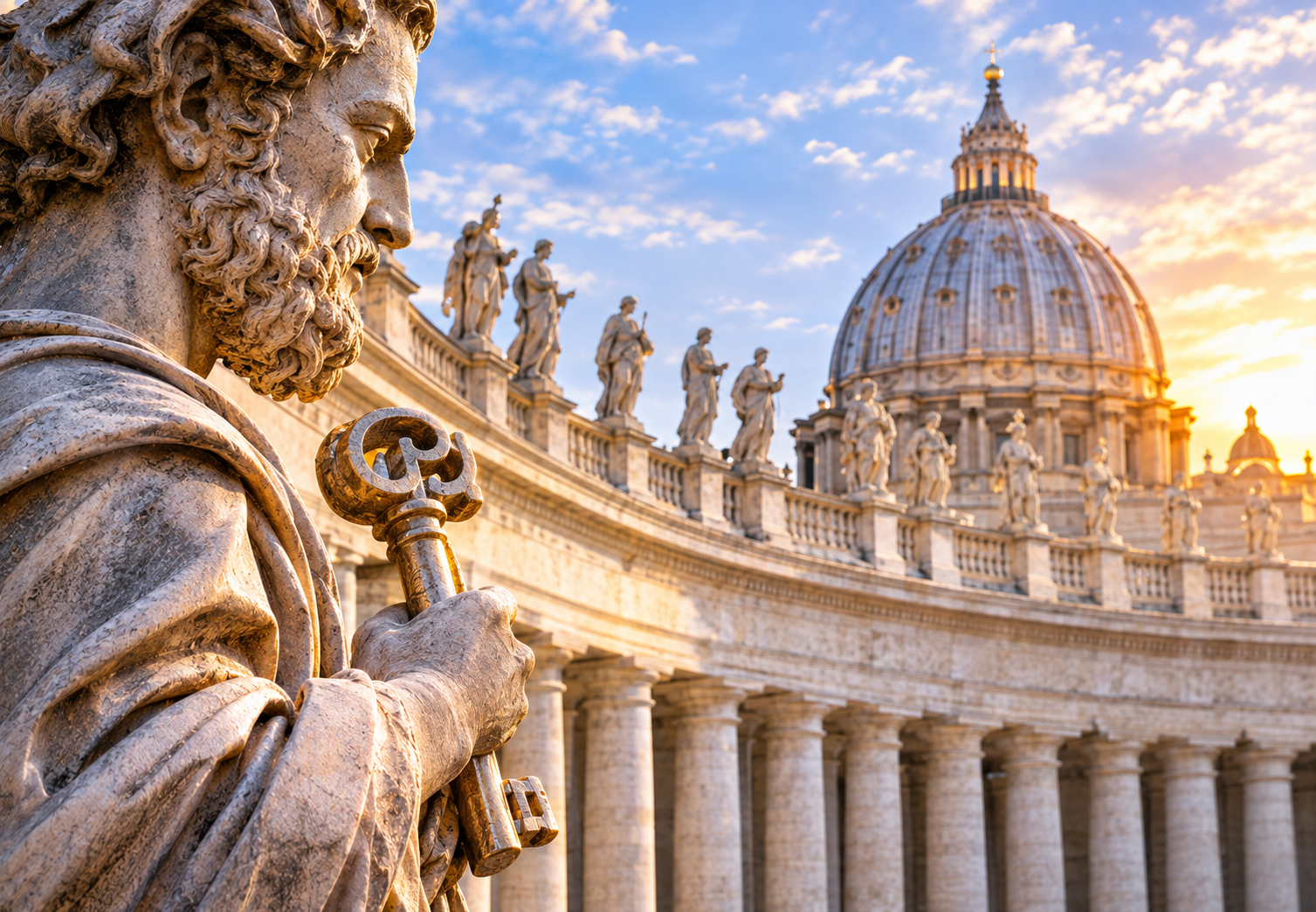
Statue of Saint Peter holding the keys, with the Vatican colonnade and St. Peter’s Basilica in the background, symbolizing the papacy’s connection to Christian tradition.

I first noticed the term civilization of love in Pope Leo’s encyclical on artificial intelligence. When I discovered it had been used by all the popes since Vatican II, I decided to read their encyclicals. I came away with a much greater appreciation of the unique role the papacy plays.

In modern global society, where the media features those with powerful voices, the office offers my kind of Christianity a spokesperson recognized around the world. In fact, even though their presiding bishops say the same things, far more Lutherans know what the popes say.

I also came to admire how the office provides a unique link to past tradition. The popes are always talking with former popes in their letters. They obviously want to build on the wisdom of the past.

More than that, you sense they are participating in the development of doctrine. Pope Paul VI introduced the term civilization of love in 1970 in an effort to follow Vatican II’s call for dialogue with society. Pope John Paul II picked it up and used it extensively in contrast to a culture of death. Popes Benedict, Francis, and Leo continued employing it to address global issues such as artificial intelligence, social divisions, endless warfare, and economic inequality.

And it is terribly significant that this is done by popes who hold an ecclesiastical office rather than scholars who operate in academic institutions. Protestant theologians write scholarly papers that emphasize their originality rather than coordination. They use technical language to converse with other scholars. The popes use everyday speech as they address the whole Christian community.

In the past, people emphasized the authority of the office, which was regarded as infallible. However, papal infallibility was formally invoked only once in the past century. Far more important is the office’s role in providing a spokesperson for the faith.


Leave a Reply

Your email address will not be published. Required fields are marked *

This site uses Akismet to reduce spam. Learn how your comment data is processed.

Lesson 1: Changes in Friendship

When I was growing up in Sunbury, Pennsylvania, people spoke of “family and friends.” I had all sorts of “family” throughout the small city. When we would gather for annual reunions, we would be joined by some of the few who had moved away to seek their fortunes. I could also point to many “friends” […]

Read More

Lesson 5: Building a Moral Society (Pope Benedict XVI) 

Ever since the 1960s, the popes have called on audiences, especially youth, to build a civilization of love. At the time, many Christians grew uncomfortable with American society. Jerry Falwell and Pat Robertson warned evangelicals that secular society was trying to close down churches for opposing abortion and homosexuality. They advocated getting involved in politics […]

Read More

Lesson 1: The Moral Crisis

Why is Michael Sandel’s introduction to ethics the most popular class at Harvard? What led “China Newsweek” to name Sandel the most influential foreign figure of the year 2011? How come my classes report using Sandel’s book has provoked some of our most exciting discussions? I suspect the answer has something to do with the […]

Read More

By continuing to use the site, you agree to the use of cookies. more information

The cookie settings on this website are set to "allow cookies" to give you the best browsing experience possible. If you continue to use this website without changing your cookie settings or you click "Accept" below then you are consenting to this.

Close