
The question is a good way to end our consideration of Christianity as a peace movement. The fourth of the weapons that Revelation offers might well be the critical one. Christians not only are to unveil the truth, speak God’s Word, and pray constantly, but also to be ready to give their lives for the Gospel. Even a casual reading of the Apocalypse shows that John features martyrs throughout his book. They played such a decisive role that the Church still speaks of herself as being founded on the blood of the martyrs.
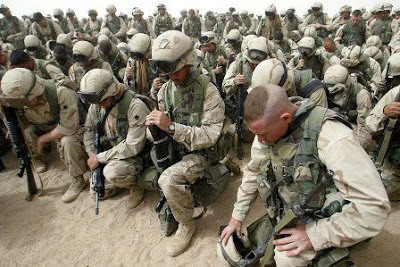
Until the Church regains this part of the Christian lifestyle, she will have nothing to say to modern society. Others claim they are ready to sacrifice themselves for their causes. Freedom fighters proclaim, “Give me liberty or give me death.” Patriots profess, “My country right or wrong.” Warriors pledge to give their lives for those fighting along side of them, and lovers promise to die for their friends and family.
However, modern Christians seldom, if ever, speak of their willingness to give their lives for the Gospel or fellow Christians. Instead they present the message as laws of creation that insure prosperity, or as positive thinking that leads to success, or as a way to salvation after death. Pastors appear to avoid the fundamental teaching about losing your life in order to find it. I cannot remember ever being asked from the pulpit, “For what are you willing to die?”
You see the reluctance to ask this question in the common response to fundamentalist Muslim suicide bombers. The focus is usually on the demonic nature of a religion that would ask someone to give his or her life for the cause. It seldom proceeds to the contrast between giving your life for violence or love. The Christian martyr is willing to die rather than to kill another child of God; the terrorist dies in order to kill. Christian martyrs die that others might live.
If Christianity is to regain her voice as a peace movement, she will have to be willing to walk the talk. She must be unconditionally committed to live nonviolently, so that God’s Word might endure, even though we as individuals do not survive.
Perhaps we can begin our recovery by asking the question of each other in all kinds of circumstances. One of my late friends, Rustum Roy, believed this was essential. He liked to remember an evening spent with a high school youth group. He was supposed to talk about why a world-class scientist would be a Christian. Instead he told the young people he wanted to hear how they would answer the question, “For what are you willing to die?” because their responses were critical to their faith. The kids jumped right in, probably because they knew they were dealing with a significant issue of life and death.
If we are to remain faithful to Christianity as a peace movement, we shall have to unveil truth, speak God’s Word, and pray constantly. We shall also have to work hard and discipline ourselves. But perhaps most significantly we shall have to be unconditionally committed to Christ, even to being ready to give our lives for his Gospel.