A few weeks ago, Father Jude reminded us that the given in a democracy is a reasonable, educated audience. “Absent that as the valid context, free speech in a democracy is just so much noise, at best, and, at worst, a detriment.”
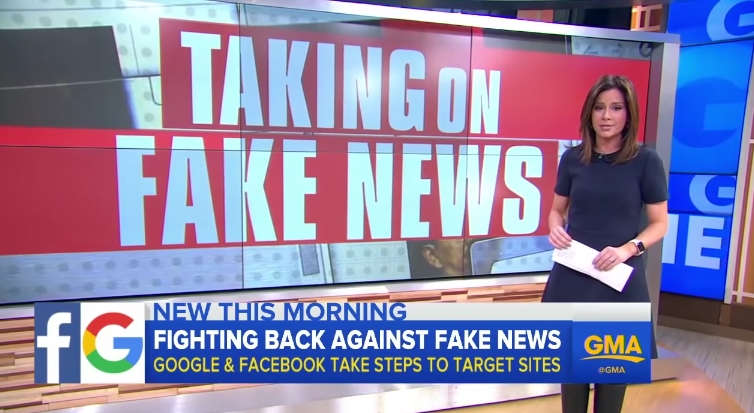
Knowing Jude, I am sure he did not mean that all reasonable and educated people make good decisions. He is well aware of human frailty. Fake news is nothing new. John Adams wrote about the time it took to “cook the news.” So too, science, which has become fundable research in our day, has always, to some extent, supported public opinion. And the courts, for all their claims of blind justice, have always based their judgments on who wields power.
Nonetheless, reason and education presumed some form of common story that set rudimentary standards for evaluating what is truth and even fact. Communities functioned, because the people with whom you dealt everyday could be assumed to somewhat embrace that story.
Until recently, that story was based on the narrative shared by the western religions: Judaism, Christianity, and Islam. Jesus made clear the essential ambiguity of that story when he responded to any request to define his teachings by telling a parable. If pushed to clarify his meaning, he simply told another story. I see this as indication that the search for truth is an ongoing conversation.
That conversation for some time has been maintained and promoted in our nation’s public school system. The system was to provide the fundamentals for good citizenship, which included not only reading and writing, but also some form of the common story.
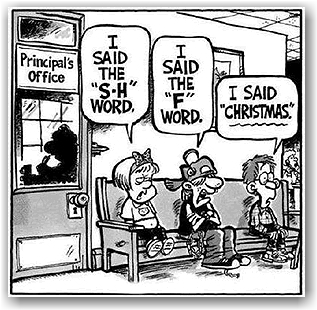
The latter was taught significantly as problems of democracy. It assumed certain canons or standards that the community regarded as norms for truth and critical thinking. Many in the community, and especially the leaders, could quote the Bible and Shakespeare when expressing their thoughts. As the social capital provided by the residue of religion dried up, political correctness was used to replace tradition. Its standards are a simple tolerance best described as politeness.
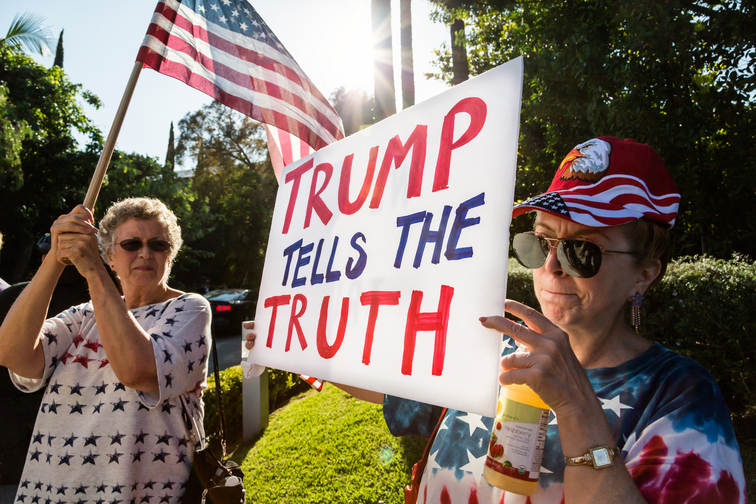
What we saw in the last election was the breakdown of political correctness. My daughter, Frances, watched Fox News for a week after the election in hopes of understanding the group that voted for Trump. She reports that she heard two kinds of reasoning. The first was voiced by those who claimed Trump said what they had believed for a long time but were afraid to say. The second reported they had not seen any hope for many years, Trump said he could fix that, they were willing to give him a chance, and if he failed, everyone would be experiencing their hopelessness so we could begin all over again.
What you hear in both positions is that this is a brand new world, a very dangerous global system that demands entirely new approaches to manage the risk involved. Along with political correctness, the common story based on religious tradition has been rejected. This is reflected in the movement championing the freedom to choose your own private school and the selection of a cabinet member who represents this position.
Inevitably, some kind of rudimentary common story will emerge from all this. I think John is correct when he suggests it is a time for Christian witness, if we are to have any kind of voice in the conversation forming that story. The first stand is to make clear that Christians believe power alone is self-destructive. The center of our message is that true wisdom is love that heals rather than exacerbates violence. The second is that the indecent lives flaunted by too many of the present public spokespeople do not serve as a model for citizenship. Truth in the Christian story is always associated with righteousness. Of course, the message goes on and on. As my son-in-law observes, it is easy to proclaim the Christian message in this context; the contrast is so evident.