
You often hear people say they’re willing to forgive someone who offended them, but they’re not going to forget what they did. Their intention is to make clear they’re not naïve. Forgiveness will not open the way for the offender to hurt them again.
Some believe this is not real forgiveness. They argue you must forgive and forget for the action to be complete. Supposedly, this is what God does, and he expects us to do the same. I imagine they are trying to say real forgiveness leaves nothing in the past that would diminish your relationship in the present.
It seems we are talking about two different things. In the first, the idea is that forgiveness is not permission to do bad things; in the second, forgiveness frees a person to build a better future. In both, forgiveness enables change. It frees us from the past by opening up the future.
Many in our time do not appreciate this when they advocate not acknowledging past evils because doing so makes them or their people look bad. Their denial of truth prevents remembering, so we don’t repeat. It also stands in the way of considering what we ought to be doing in the future.
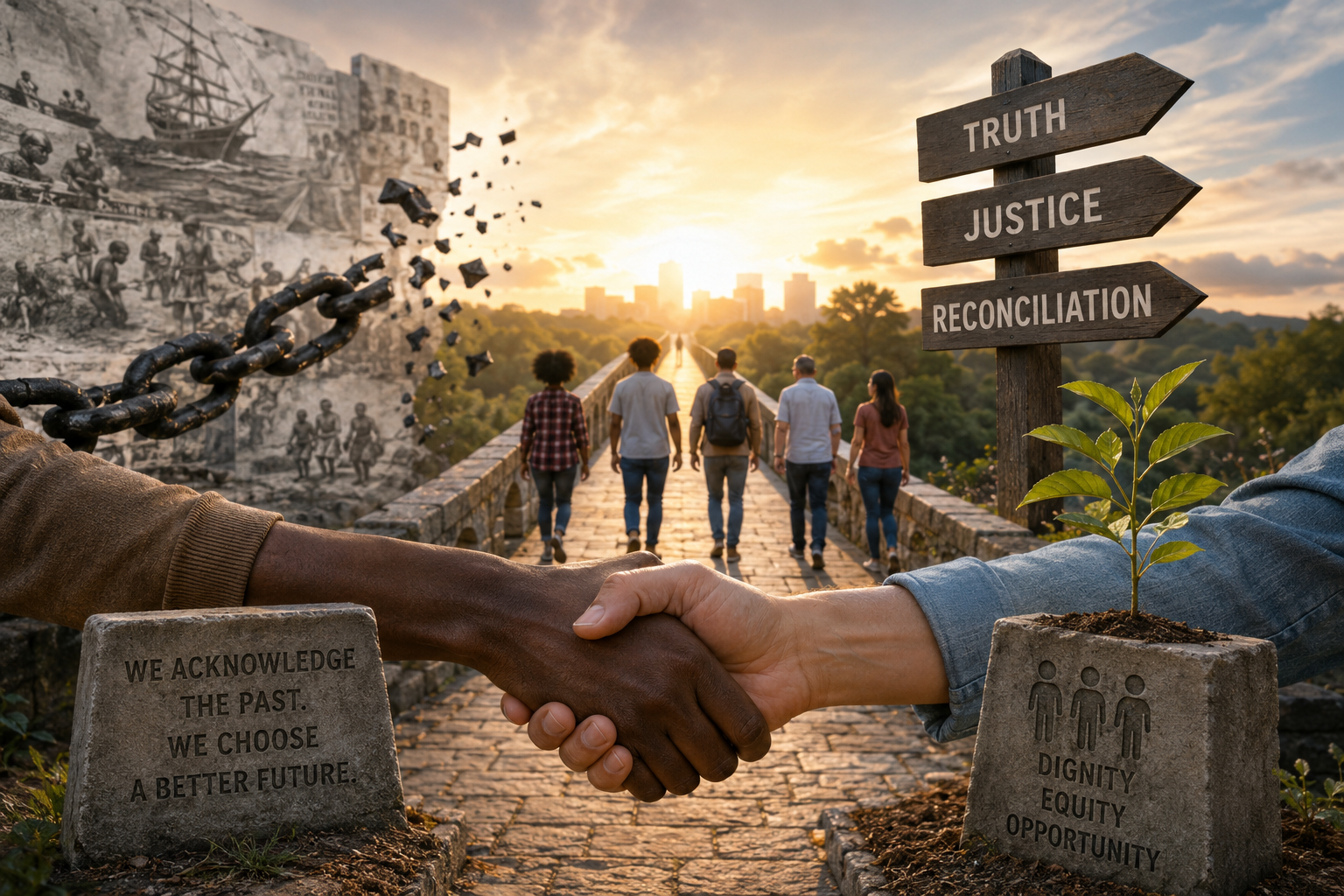
The discussion raises the question of whether forgiveness demands some form of reparation. For instance, one group argues we cannot expect to be forgiven for slavery unless we offer some form of compensation to those who suffered. If they are no longer with us, that means offering reparations to their descendants, who have obviously been affected in some way.
Those who oppose them argue there is no sensible way to do that. Even though we might have profited because our predecessors enslaved people, we are not responsible for their actions. Besides that, there is no way to determine exactly what is owed. Forgiveness involves acknowledging slavery was evil and working to prevent it from happening in any form again.
That seems to be the position Pope Leo takes in his recent encyclical. He acknowledges that slavery and colonization are systems of plunder and asks forgiveness for the church’s condoning them in the past. He does not speak of reparation. Instead, he declares that Christians should not profit from present forms such as economic exploitation and social domination.
At the same time, forgiveness does not deny justice. We certainly can try to be fair in the present. We can be realistic about reparations, but still use DEI (Diversity, Equity, and Inclusion) to boost opportunities for those disadvantaged by past practices.